





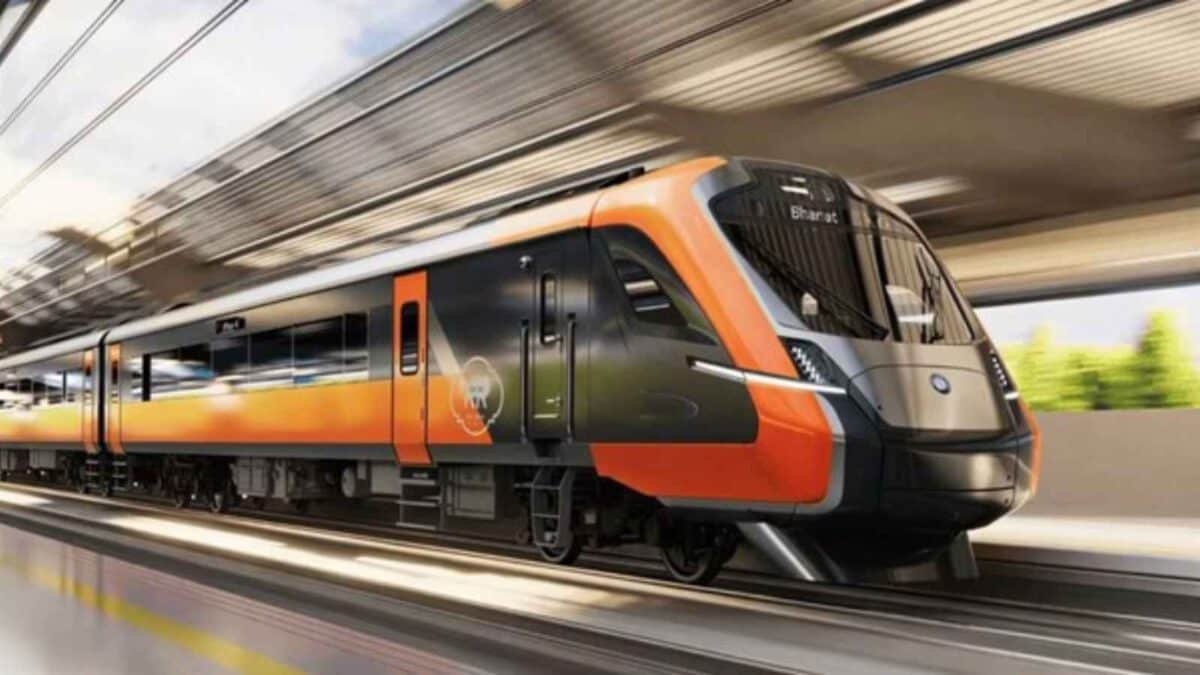
The Vande Bharat Express is set to expand beyond its traditional chair-car configuration, with Indian Railways intensifying efforts to introduce sleeper services, new routes, and expedite freight operations. Exciting developments are emerging across the rail network, and proposals for additional services continue to attract passenger interest.
Among the noteworthy updates is the potential introduction of a sleeper train connecting Varanasi with New Delhi. The Railway Board has begun discussions on this service, although the specific route is still under consideration. There is optimism that this service might be launched in time for the festive season, which could help alleviate travel congestion during Dussehra and Diwali.
The strong passenger demand is a significant motivator for this proposal. Despite the availability of services like the Kashi Vishwanath, Shivganga, and the Banaras-New Delhi Superfast Express, along with two Vande Bharat and three Mahamana Express services operating weekly from Varanasi Junction, the demand remains robust. Sunday evening trains, in particular, often experience overcrowding, indicating a need for additional long-distance travel options for those commuting between Kashi and the capital.
Another sleeper service is under consideration for the route between New Delhi and Patna, with discussions intensifying as the Diwali and Chhath festivals approach. Social media is abuzz with reports suggesting that a Sleeper Vande Bharat could commence operation on October 2, 2026, although Indian Railways has yet to officially confirm this date or the service.
In a significant breakthrough for freight services, India’s first Vande Bharat Freight EMU has successfully reached speeds of 130 km/h during trials on the Ahmedabad-Mumbai Central route. This 16-coach train, manufactured by the Integral Coach Factory (ICF) in Chennai, is designed to efficiently transport parcels and goods at higher speeds, targeting sectors like e-commerce and cold-chain logistics.
Additionally, Surat has received approval for its inaugural Vande Bharat service, which will connect Surat and Udaipur City. Train number 26903/26904 is set to cover approximately 690 km in about seven and a half hours, operating six days a week with a Tuesday closure. The train is scheduled to depart Surat at 6:10 AM, arriving in Udaipur City by 1:40 PM, and will return the same day.
This new service will also make nine commercial stops, enhancing connectivity between key areas in Gujarat and Rajasthan, and is expected to commence before the Navratri festival on October 11.
Concerns have been raised regarding the proposed timings for a Vande Bharat service between Bengaluru and Mangaluru after a recent trial. While the trial ran smoothly, passenger advocacy groups have pointed out that the timing needs to accommodate commuters traveling from the coast to Bengaluru for work. They suggest that the train should ideally depart Mangaluru in the morning and return the same night to be more practical for passengers.
In response to demands for increased connectivity from Balangir in Odisha, the Railway Board acknowledged that Balangir currently has 66 train services, including links to major cities like Bengaluru and Varanasi. However, they noted that new services depend on traffic assessments and operational viability.
On a lighter note, a story involving a ticket examiner and two boys aboard a Vande Bharat train has gone viral, attracting over 10 million views. The boys had boarded the train out of curiosity and faced potential fines, but the TTE, upon learning their story, allowed them to exit without penalty, showcasing a moment of kindness.
As Vande Bharat’s network expands, comparisons with the Rajdhani Express highlight the unique travel needs each service addresses, rather than direct competition.