






Bhubaneswar: The Comptroller and Auditor General of India (CAG) has raised concerns over major financial and administrative shortcomings in Odisha’s tourism and transport sectors, noting a loss of Rs 207.68 crore from the organization of seven eco-retreats, as well as Rs 898.48 crore held in bank accounts by implementing agencies and ineffective collection of transport tax arrears.
These observations were made in the CAG’s report on the compliance audits related to the “Development of Tourism in Coastal Zone in Odisha” and the “Functioning of State Transport Authority and Regional Transport Offices in Odisha” for the fiscal year ending March 31, 2024. The audit encompassed the period from 2019-20 to 2023-24.
The report, created under Article 151 of the Constitution and the Comptroller and Auditor General’s (Duties, Powers and Conditions of Service) Act, 1971, includes two chapters focused on the tourism and transport sectors.
The CAG noted that the Department of Tourism (DoT) returned Rs 103.35 crore due to unutilized funds from a total budget allocation of Rs 2,278.04 crore.
Additionally, it was revealed that Rs 898.48 crore allocated for tourism projects was sitting in the bank accounts of nine executing agencies due to various reasons, including lack of clearance from statutory authorities, absence of administrative approvals, and unavailability of land. Nearly 90% of this amount, specifically Rs 806.44 crore, remained unutilized in the accounts of the Odisha Tourism Development Corporation (OTDC) and State Tourism Development Corporation (STDC) for five years.
The audit pointed out that financial returns from tourism initiatives were lacking. The OTDC was unable to collect Rs 10.72 crore from government entities and an additional Rs 72 lakh from private companies for services related to transport, lodging, and accommodations.
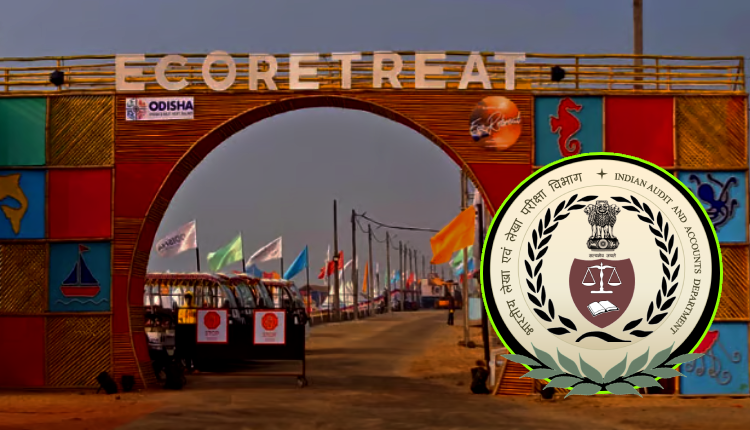
The department also reported a loss of Rs 207.68 crore from the seven eco-retreats held between 2019-20 and 2023-24, according to the CAG.
Efforts to promote beach tourism also faced challenges. The DoT and OTDC failed to launch beach shacks, which led to a blockage of Rs 1.25 crore and an estimated loss of potential revenue of Rs 45.50 lakh annually.
The CAG’s findings indicated that numerous projects initiated under centrally sponsored schemes were left incomplete despite significant expenditures.
For instance, under the PRASAD initiative, Rs 6.49 crore was allocated for infrastructure development at Puri, Shree Jagannath Dham-Ramchandi-Prachi River at Deuli-Dhauli, yet the project remains unfinished.
Similarly, objectives associated with the Swadesh Darshan scheme have not been met, despite an expenditure of Rs 41.60 crore at locations such as Barkul, Satpada, Tampara, and Gopalpur.
The Bindusagar Lake development project, aimed at boosting tourist attraction, has been incomplete for over nine years and has seen an expenditure of Rs 8.16 crore.
Moreover, the Shamuka special tourism area project in Puri district has also not been completed, resulting in an ineffective use of Rs 11.92 crore.
Despite spending Rs 3.78 crore during 2020-25, the development of three Blue Flag beaches at Niladri, Muhan, and Pir Jahania in Puri remains unachieved.
The audit also uncovered the construction of permanent or semi-permanent structures within sanctuaries, national parks, and Protected Forest areas, contravening government regulations and the Forest Conservation Act of 1980.
Projects mentioned by the CAG included the beachfront promenade at Ramchandi, the widening of the access road from Puri-Konark Marine Drive, and a Panthasala at Talasari, with total expenditures amounting to Rs 28.84 crore.
Furthermore, 20 Panthanivas were found to be operating without the necessary fire safety certificates, which is a legal requirement for hotels, lodgings, and guest houses to adhere to fire prevention and safety standards.
The inflow of tourists remains concentrated in a handful of coastal districts, with Puri and Khordha accounting for 48% of the state’s tourist arrivals from 2019-24, primarily due to attractions like the Shree Jagannath Temple, Rath Yatra, and Puri’s beaches. The audit urged more attention to developing tourism projects in other coastal areas to enhance their cultural, ecological, and heritage prospects.
In examining the State Transport Authority (STA) and Regional Transport Offices (RTOs), the CAG also uncovered various regulatory, tax collection, vehicle safety, and enforcement deficiencies.
The lack of a robust regulatory framework for aggregator services and the absence of a defined base fare allowed these services to operate without licenses and set fares arbitrarily, the report noted.
It was also observed that inconsistencies in the one-time tax on vehicle sales arose from not fixing the base price for tax calculations.
The department accepted motor vehicle tax without verifying valid Fitness Certificates in the VAHAN system, resulting in uncollected inspection fees of Rs 73.18 lakh from 9,760 vehicles.
Concerns were raised about passenger safety as public service vehicles were registered without ensuring the mandatory installation of vehicle location tracking devices and emergency buttons.
The department failed to implement High Security Registration Plates (HSRPs) for 17.61 lakh vehicles registered before March 2019, along with 1.52 lakh vehicles registered without HSRPs up to March 31, 2024.
The lack of an automated process and deficiencies in the GIS-based Planning and Permit Management System and the Odisha Public Transport and Integrated Commuter System led to manual intervention for vehicle permit issuance.
The audit also highlighted significant revenue implications regarding stage carriage permit issuance, with Rs 30.23 lakh in taxes either unlevied or under-levied in 75 cases, alongside a maximum penalty of Rs 60.45 lakh that could also be imposed.
In another 30 instances, regular permits were issued instead of express permits, resulting in a tax loss of Rs 14.59 lakh.
Moreover, the department’s tax recovery system was noted to be ineffective, with only Rs 9.71 crore, or 1.83%, of a target of Rs 530 crore in arrears being collected by August 2024.
A significant issue identified was the vast number of unresolved e-Challans, with 39.55 lakh challans involving Rs 1,136.62 crore still pending with RTOs, courts, or police authorities. This situation allowed vehicles to operate without paying applicable taxes and penalties.
Additionally, the CAG observed that enforcement officials frequently recorded only one or two violations even when multiple motor vehicle offenses had occurred, leading to uncollected fines estimated at Rs 640.87 crore.
Lastly, the audit raised alarms regarding road safety. The Road Safety Policy of 2015 had set ambitious targets to reduce road accidents by 50% and fatalities by 20% by 2020, using 2015 as the baseline year. However, the CAG found an increase in road accidents, injuries, and fatalities from 2019-23, with the exception of 2020.