





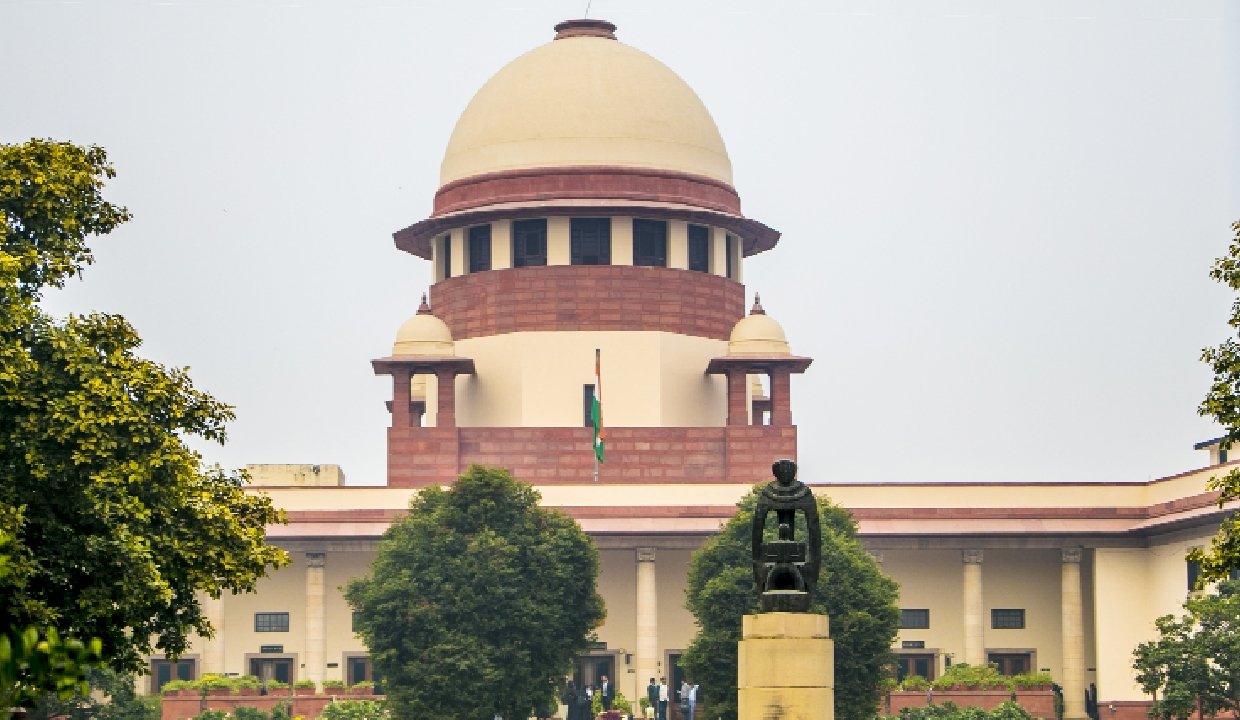
In an effort to halt the loss of experienced judicial professionals and ensure justice remains accessible, the Supreme Court has instructed seven states to raise the retirement age for judicial officers from 60 to 62 years.
A bench led by Chief Justice Surya Kant, along with Justices Joymalya Bagchi and V Mohana, stated that judicial officers in these states who retired after March 31 of this year should have the option to return to their positions if they have not secured alternative employment.
The states that have agreed to this increase—Chhattisgarh, Karnataka, Madhya Pradesh, Maharashtra, Sikkim, Tamil Nadu, and West Bengal—are required to amend their service rules to reflect this change, contingent upon the suitability assessment of each judicial officer by the High Court upon reaching 60 years of age. The bench urged that these amendments be executed promptly, ideally within two months.
Furthermore, the court emphasized that no judicial officer in the aforementioned states who has reached the age of 60 should retire until they turn 62, pending an assessment of their suitability and performance by the relevant High Court.
The apex court has also directed several other states and Union Territories—including Andhra Pradesh, Arunachal Pradesh, Assam, Bihar, Goa, Gujarat, Haryana, Himachal Pradesh, Jharkhand, Kerala, Manipur, Meghalaya, Mizoram, Nagaland, Odisha, Punjab, Rajasthan, Telangana, Tripura, Uttarakhand, Uttar Pradesh, NCT of Delhi, Jammu and Kashmir, and Puducherry—to reconsider their stance on increasing the retirement age for judicial officers.
These jurisdictions have been given a two-week deadline to reach a decision and report back on their compliance.
The court noted that while age differences may be a valid expectation within the superior judiciary, there is an urgent need to retain experienced judicial talent to bridge the gap between sanctioned and actual judicial personnel, ensuring that justice does not become an unattainable ideal due to unfilled vacancies.
The bench encouraged High Courts and states to reassess the upper age limit for the district judiciary, which is guided by rules established on their recommendation.
Additionally, the court acknowledged that some high courts have wisely included specific conditions regarding the assessment of judicial work, allowing for the removal of less competent officers while retaining those of proven integrity.
The bench welcomed this approach as it balances the preservation of experienced judges with the necessity of eliminating ineffective personnel, thereby opening the door for new talent.
Previously, the court had indicated that states could not use financial constraints as a reason to resist increasing the retirement age of judicial officers, urging them to revisit this important issue.
This discussion arose during the hearing of a petition advocating for a uniform increase in the retirement age of district judges nationwide from 60 to 62 years. Currently, Supreme Court justices retire at 65, while High Court judges do so at 62.
The matter has historical significance, referencing a 2002 Supreme Court ruling that rejected a recommendation from the Justice K Jagannatha Shetty Commission to raise the retirement age for district judges to 62. Since then, a few states, including Telangana and Madhya Pradesh, have taken steps to increase this age limit.