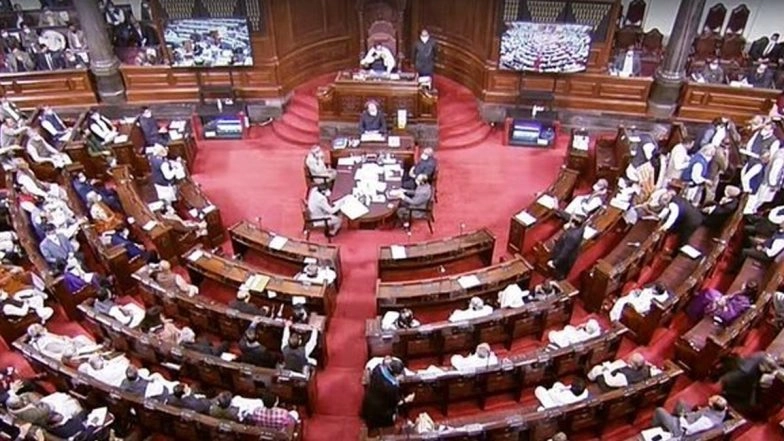





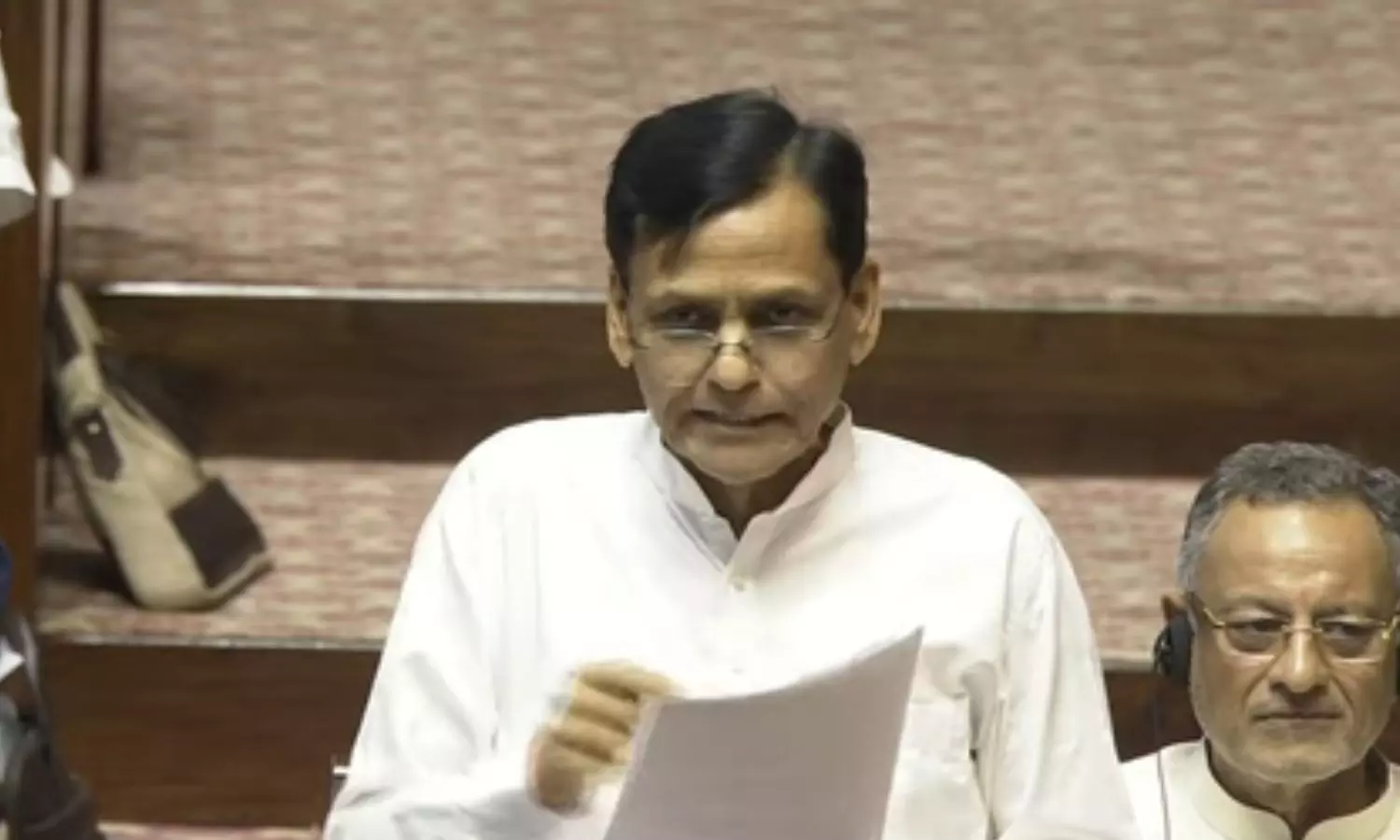
On Tuesday, the Rajya Sabha successfully passed the Registration of Births and Deaths (Amendment) Bill, 2026 through a voice vote, despite ongoing protests and slogan chanting from opposition parties.
This legislation had already received approval from the Lok Sabha on July 31.
Following the bill’s passage, Deputy Chairman Harvansh Naryan Singh suspended the session until Wednesday.
When the session resumed at 2 p.m., the Deputy Chairman asked Minister of State for Home Affairs Nityanand Rai to present the bill for consideration.
After the introduction, the Deputy Chairman permitted Leader of the Opposition Mallikarjun Kharge to address the House.
Kharge asserted that the Prime Minister and Home Minister’s presence was essential for restoring order, but he was not allowed to continue and was instead interrupted to allow Fulo Devi Netam from Congress, representing Chhattisgarh, to speak.
Netam stressed the need for the Home Minister to be present as the bill relates to his ministry’s jurisdiction.
The Deputy Chairman urged her to restrict her comments to the bill, but she persisted in her demand for the Home Minister’s presence.
The Chair then called on Darshana Singh of the BJP from Uttar Pradesh to take the floor.
Tiruchi Siva from the DMK in Tamil Nadu also pointed out the Home Minister’s absence during discussions on such an important bill.
The Deputy Chairman directed him to focus solely on the bill, preventing further comments on the absence of the Home Minister and inviting Santrupt Mishra of the BJD from Odisha to speak.
Throughout the discussions, opposition members continued their protests.
Several other legislators contributed to the brief debate, including Meda Raghunadha Reddy of the YSRCP (Andhra Pradesh), Dr. M. Thambidurai and Dr. M. Dhanpal of the AIADMK (Tamil Nadu), Ravi Chandra Vaddiraju of the BRS (Telangana), Pramod Boro of the United People’s Party Liberal (Assam), Biswajit Sinha of the BJP (West Bengal), and Jyoti Nagnath Waghmare of the Shiv Sena (Maharashtra).
A.A. Rahim of the CPI(M) and Santosh Kumar P. also questioned the absence of the Home Minister, with Santosh Kumar noting that the Home Minister was supposed to present the bill, stating, ‘Home Minister is the subject of the Bill.’
However, the Deputy Chairman instructed him to stick to the topic and called on Sadhna Singh of the BJP from Uttar Pradesh.
As the uproar continued, many contributions were lost amid the noise.
V. Sivadasan of the CPI(M) voiced his opposition to the bill.
In response to the debate, Minister of State for Home Affairs Nityanand Rai stated that the new legislation aims to guarantee the registration of every birth and death nationwide.
The Registration of Births and Deaths (Amendment) Bill, 2026 modifies the existing Registration of Births and Deaths Act of 1969, establishing a more stringent two-tier system for late registrations.
For registrations delayed by one to two years, an order from a district magistrate, sub-divisional magistrate, or an authorized executive magistrate will still be required. However, for delays surpassing two years, such orders must now be issued exclusively by a Judicial Magistrate of the First Class.
This amendment transfers the authority for very late registrations from the executive branch to the judiciary, aiming to curb fraudulent records and enhance the accuracy and reliability of civil registration and population data in India.