





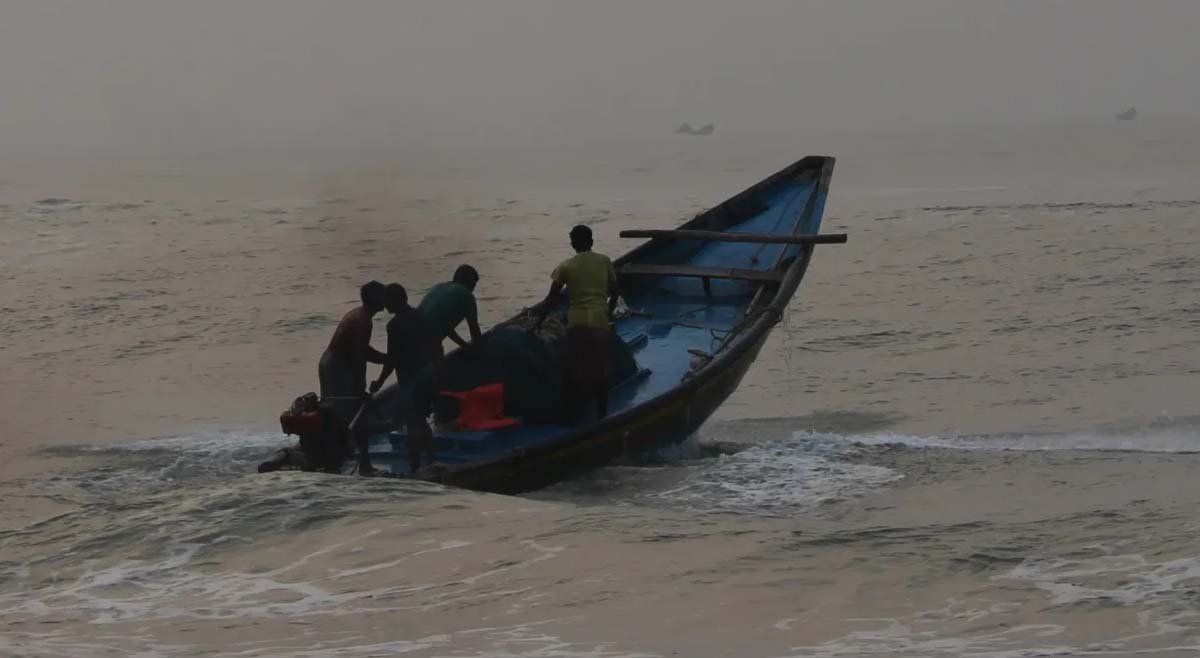
The government of Odisha has introduced targeted policies to tap into the economic advantages offered by its 575-kilometer coastline. These initiatives focus on enhancing deep-sea fishing activities and allowing the cultivation of white-leg shrimp beyond the Coastal Aquaculture Authority’s jurisdiction.
These measures are part of the state’s broader strategy to promote growth driven by the blue economy.
Deep-Sea Fishing Initiative
In Odisha, the marine fishing community consists of approximately 1.5 million individuals spread across over 800 villages. However, fishing activities are predominantly limited to near-shore areas, which intensifies pressure on coastal fishery resources.
According to Anu Garg, the chief secretary of Odisha, scientific evaluations have revealed substantial offshore and deep-sea fishery resources that remain underutilized.
High-value species including tuna, billfish, and oceanic squid represent some of these untapped resources.
The government’s mission aims to foster sustainable deep-sea fishing practices, modernize marine fisheries, boost seafood exports, and improve the livelihoods of fisherfolk. Through these initiatives, Odisha aspires to become a premier hub for deep-sea fishing and marine exports in Eastern India.
The mission emphasizes the sustainable management of resources by employing scientific methods, modern fishing technologies, and responsible fishing techniques.
Implementation Strategy
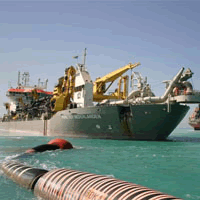
The outlined interventions are planned for execution over a decade, from 2026 to 2036, encompassing the entire marine fisheries value chain. Proposed changes include the introduction of modern deep-sea fishing vessels, upgrading existing mechanized fishing boats, and deploying mother vessels.
A budget of ₹2,300 crores has been allocated for the implementation of this mission over the next ten years.
The government aims to modernize fishing harbors and landing centers, establish seafood parks, integrate cold-chain logistics, enhance seafood processing facilities, and implement digital governance in fisheries. Additionally, it will focus on building capacity among fisherfolk and promoting seafood exports.
A dedicated Blue Economy Hub (B-Hub) is also planned to serve as a center for knowledge, innovation, and coordination related to the mission.
The mission will enhance scientific fisheries management through resource assessment, digital monitoring, traceability systems, the creation of artificial reefs, sea ranching, and ecosystem-based management, while also focusing on marine safety, disaster preparedness, and the welfare of fishermen. Private sector involvement will also be sought for the mission’s execution.
This initiative is projected to yield an additional 200,000 metric tons of marine fish production each year, create over 50,000 new jobs, and elevate Odisha’s marine exports to around ₹5,000 crores annually, significantly up from the current figure of less than ₹1,000 crores.
Advancement of White-Leg Shrimp Culture
The culture of Litopenaeus vannamei, commonly known as white-leg shrimp, is currently conducted in brackish waters within a designated 2-kilometer radius from the high-tide line, as regulated by the Coastal Aquaculture Authority.
The Odisha government has now established regulatory frameworks and operational guidelines to promote white-leg shrimp farming and other suitable brackish water species in inland saline areas, specifically from 2 to 10 kilometers beyond the high-tide line.
The approved framework aims to create a scientific, environmentally sustainable, and regulated system for aquaculture development in these inland saline regions.
Operational Guidelines
The regulations stipulate mandatory farm registration, scientific site selection, biosecurity measures, disease surveillance, water quality monitoring, and the installation of effluent treatment systems.
The fisheries department will facilitate the online registration of all farms.
This framework promotes cluster-based aquaculture development, encouraging shared infrastructure and the adoption of advanced aquaculture technologies, with the goal of expanding shrimp farming, enhancing productivity, fortifying biosecurity, and improving the livelihoods of farmers.
As part of this initiative, the government aims to support an additional 25,000 hectares of farming area, increase shrimp production from 160,000 metric tons to 900,000 metric tons, boost annual seafood exports from approximately ₹5,429 crores to ₹15,000 crores by 2036, and create around 250,000 livelihoods.