







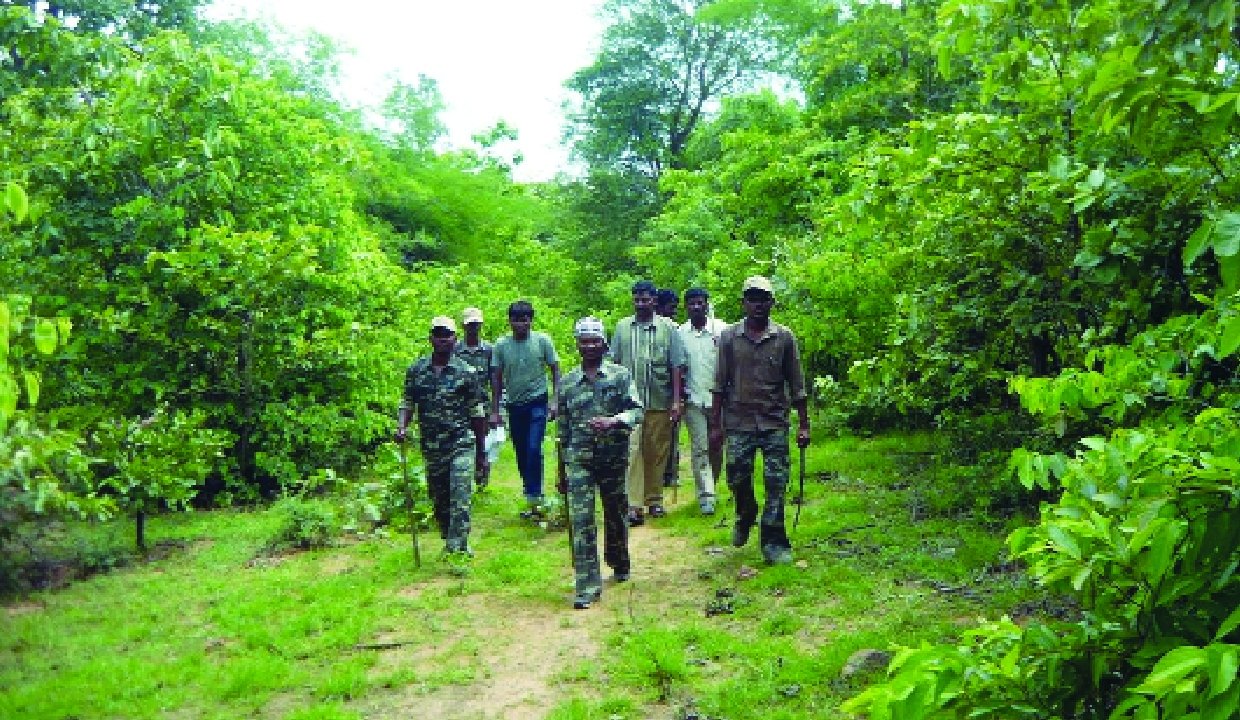
The growing violence against front-line forest personnel across India indicates a severe crisis in the nation’s environmental governance and forest protection system. Field staff, including Range Forest Officers, Foresters, and Beat Guards, are increasingly targeted by organized timber smugglers, illegal encroachment networks, poaching syndicates, and land mafias operating in forested areas. A notable incident occurred in May 2026 in the Puranpur Forest Range of Pilibhit district, Uttar Pradesh, where two forest personnel narrowly avoided being run over by a tractor-trolley allegedly driven by sheesham timber smugglers, only to be cornered and assaulted during an enforcement operation.
Another alarming event took place in Madhya Pradesh, where a state minister, accompanied by supporters, allegedly threatened on-duty personnel at the Badgonda Forest Range in Indore district and forcibly removed an earth-moving machine and tractor-trolley seized for illegal land clearing. Reports state that the local police refused to file an FIR against those involved, while disciplinary action was taken against the enforcement staff, including the transfer of the deputy ranger and a departmental inquiry. The situation escalated when the Chief Conservator of Forests rejected a report classifying the land-clearing as a non-forest offence, leading to his transfer as well. Tragically, within weeks, a forest beat guard was shot dead by a timber smuggler in the nearby Punjapura Reserve Forest.
What were once isolated disputes have evolved into coordinated and violent confrontations, revealing a stark imbalance between under-equipped forest personnel and well-organized criminal syndicates. Data and reports from the last five years show that such incidents are widespread across various Indian states, with Telangana and Maharashtra being significant hotspots, followed by Madhya Pradesh and Rajasthan. Field accounts indicate that local political actors often intervene to favor alleged offenders, while pressure groups portray enforcement personnel as adversaries of forest dwellers and tribal communities. In some cases, organized networks exploit local socio-economic grievances to undermine state intervention, creating what many enforcement personnel refer to as ‘informal immunity zones’ where government authority is hard to enforce.
The misuse of the Forest Rights Act (FRA) to grant inappropriate forest rights has created governance gaps. Enforcement personnel in contested forest regions face rising risks during anti-encroachment efforts and routine protection activities. Ambiguities in land claims, weak verification processes, administrative intimidation, and political interference significantly diminish the confidence and morale of front-line staff.
A broader decline in institutional enforcement capacity within forest administration is evident due to inadequate field infrastructure and chronic staff shortages. Recent data reveals a severe vacancy crisis in front-line forest protection roles, with states like Odisha reporting around 41% vacancies, Haryana nearly 54%, and Jharkhand close to 55%. Recruitment freezes lasting over a decade have been followed by large-scale recruitment drives, which organized groups exploit due to their greater mobility and resources.
During confrontations, offenders often use local women and economically vulnerable groups as human shields and legal buffers against enforcement actions. Although some states have started to recruit more women into front-line roles, criminal syndicates have adapted their tactics, filing counter-cases to intimidate enforcement staff. A case in Telangana gained national attention when a woman forest officer was allegedly assaulted while on duty during an operation against illegal activities. The Supreme Court of India intervened, staying counter-proceedings and directing authorities to provide police protection to women forest officers.
Forest officials, who regulate access to natural resources and combat illegal extraction, often face hostility from local populations and political interests seeking electoral support through lenient enforcement. Ironically, the more rigorously foresters protect public forests and ecological areas, the more politically and bureaucratically isolated they become. In a democracy driven by electoral considerations, the task of regulating human activities to protect forests and wildlife—constituencies that cannot vote—often leads to resentment from some public sections and neglect from the institutions they serve.