





Bhubaneswar (Odisha) [India], May 3 (ANI): Odisha Governor Hari Babu Kambhampati stated on Sunday that the National Education Policy (NEP) 2020 is a significant reform that will be instrumental in achieving the vision of ‘Viksit Odisha’ by 2036 and ‘Viksit Bharat’ by 2047, highlighting education as the most powerful tool for nation-building.
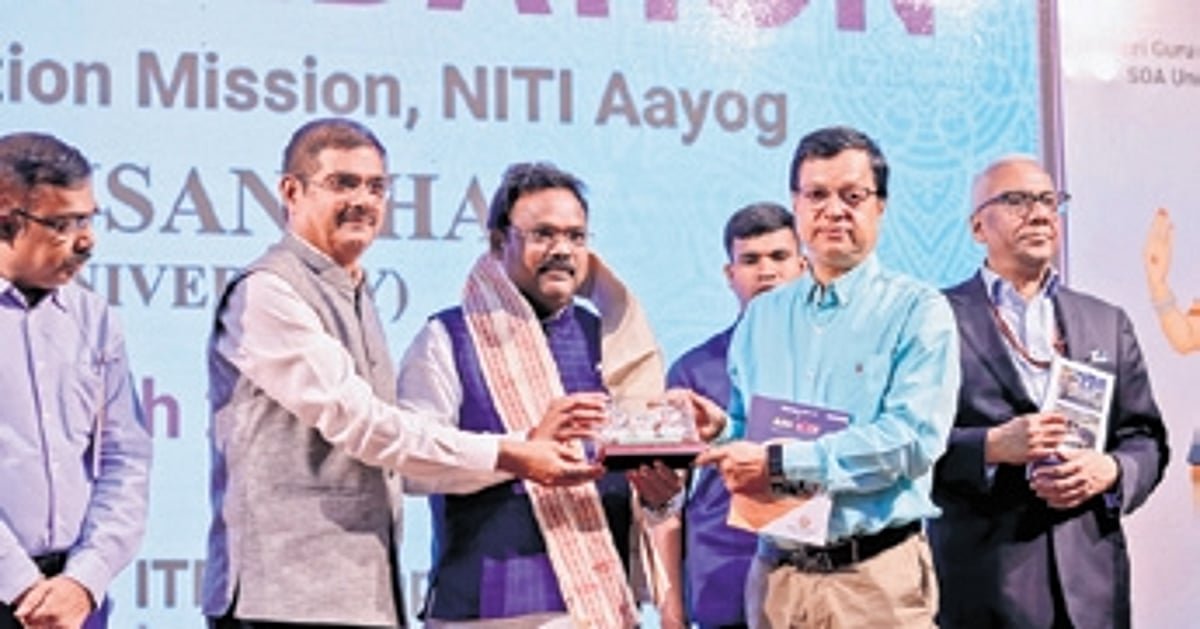
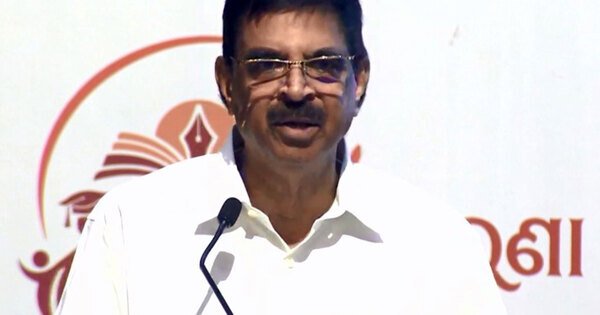
During his address at the National Level Workshop on Implementation of National Education Policy 2020 and Higher Education Reforms in Odisha, held at the State Convention Centre, Lok Seva Bhavan, the Governor remarked that NEP 2020 lays out a roadmap to leverage India’s demographic dividend and establish a robust, inclusive, and future-ready education system that can drive economic growth, social progress, and global leadership.
“Education for us was never just about acquiring knowledge, but about creating a harmonious balance and enlightened society… The world we live in today is changing at an unprecedented pace… In this context, the National Education Policy 2020 emerges as a visionary and transformative framework… Its implementation is not just an educational reform, but a foundational pillar to realise the vision of Viksit Odisha by 2036 and Viksit Bharat by 2047,” he stated.
Kambhampati described the workshop as a timely and visionary initiative, reflecting a collective commitment to reinforcing education as the cornerstone of national progress and human development. He noted that India has historically been a global hub of knowledge, wisdom, and intellectual leadership, with significant contributions in fields such as mathematics, astronomy, medicine, and literature.
Acknowledging the rapid global changes influenced by artificial intelligence, biotechnology, data science, and digital innovation, the Governor pointed out that the knowledge economy now requires critical thinking, creativity, adaptability, and interdisciplinary learning. He emphasized that NEP 2020 signifies a crucial transition from rote learning to experiential learning, holistic development, and multidisciplinary education tailored to the needs of the 21st century.
He commended Prime Minister Narendra Modi and Union Education Minister Dharmendra Pradhan for implementing the ‘comprehensive and forward-looking’ policy designed to elevate India to a global knowledge superpower. The Governor also recognized Chief Minister Mohan Charan Majhi and Higher Education Minister Suryabanshi Suraj for Odisha’s proactive approach to implementing NEP 2020 starting in August 2024.
Kambhampati noted that Odisha has initiated substantial reforms in higher education, including curriculum restructuring, promotion of skill-based learning, and measures to ensure transparency, accountability, and inclusive growth. He highlighted the Odisha Universities (Amendment) Act and the University Teacher Cadre Reservation Act as key steps towards enhancing equity in higher education.
Stressing the importance of skill development, entrepreneurship, and employability, the Governor asserted that education should empower youth not only to seek jobs but also to innovate and create opportunities. He called for collaborative efforts from the government, academia, industry, and society to effectively implement NEP 2020 at the grassroots level.
The Governor urged universities to adopt local villages and work towards ensuring the effective execution of welfare schemes from both State and Central Governments. He further called for harnessing the energy and potential of students for greater societal and national development.
During the workshop, Higher Education Minister Suryabanshi Suraj presented recommendations and a future action plan for NEP 2020’s implementation in Odisha. He discussed the relevance of Sanskrit in understanding culture and history, suggesting that ancient concepts could inspire modern innovations, such as the Pushpaka Vimana and Brahmastra, which relate to advancements in aerodynamics and missile technology.
Speaking to ANI, Suraj stated, “What we call modern science today, its concept existed in our Puranas, our epics, and our mythology. You are talking about Pushpaka Vimana; we could think of it even then, we had the concept of aerodynamics. We spoke of Brahmastra; we had the concept of a targeted guided missile system thousands of years ago. So, these things need to be brought forward. The youth will also be inspired, and in the times to come, the knowledge hidden in India’s Vedas-Vedantas, Upanishads, and all our manuscripts will be revealed.”
Prof. Shreerup Goswami from the Department of Geology at Utkal University presented a report on the discussions held during the two-day workshop on May 2 and 3. The welcome address was delivered by Aravind Agrawal, Commissioner-cum-Secretary of the Higher Education Department.