





New Delhi, July 20: India is rapidly advancing its major port upgrades and constructing new deep-water terminals to seize transshipment traffic currently flowing through Colombo and Singapore, according to a recent report, coinciding with the arrival of the MSC Irina at Vizhinjam earlier this month.
The report from India Narrative indicates that the government is working to deepen the drafts at several key ports, including Kamarajar Port in Ennore near Chennai, Paradeep Port in Odisha, and Deendayal Port in Kutch, increasing the depth from 14 metres to 18 metres to accommodate larger ‘mother vessels.’
The report criticized earlier administrations for failing to develop India’s major ports into international transshipment hubs, which are essential for handling mother vessels capable of transporting between 14,000 to 24,000 twenty-foot equivalent units (TEUs).
It noted, ‘For decades, India’s maritime trade has dealt with a quiet but costly irony. Despite having over 7,500 kilometres of coastline and some of the busiest shipping lanes near its southern tip, the nation lacked ports equipped to handle mother vessels.’
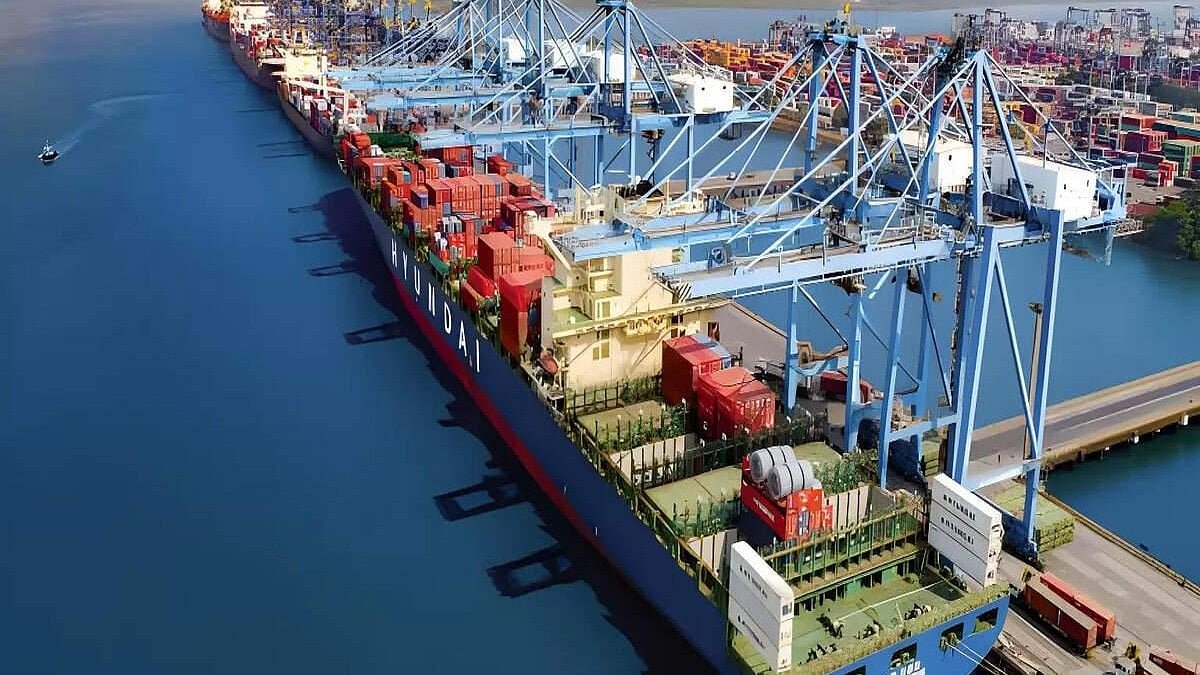
Following Prime Minister Modi’s commitment to rectify this issue, the report highlights that the arrival of the MSC Irina, the largest container ship globally, at Vizhinjam Port on July 7 signifies a significant shift in addressing this long-standing problem.
It emphasized that the previous oversight is now being tackled with a level of urgency that corresponds to the seriousness of the issue.
The government’s current initiatives aim to deepen draft levels at various major ports, allowing them to manage Cape-size dry bulk vessels, which can carry approximately 200,000 tonnes of deadweight cargo.
Additionally, the report pointed to a series of upcoming projects, including Vadhavan Port in Maharashtra, expected to have a natural draft of nearly 20 metres and aspirations to rank among the world’s top ten container hubs.
In the private sector, Mundra Port in Gujarat, with a draft of 17.5 metres, has already demonstrated the feasibility of this approach by becoming the only Indian port capable of shipping over 14,000 TEUs directly to the United States, effectively eliminating the need for an intermediary hub.