




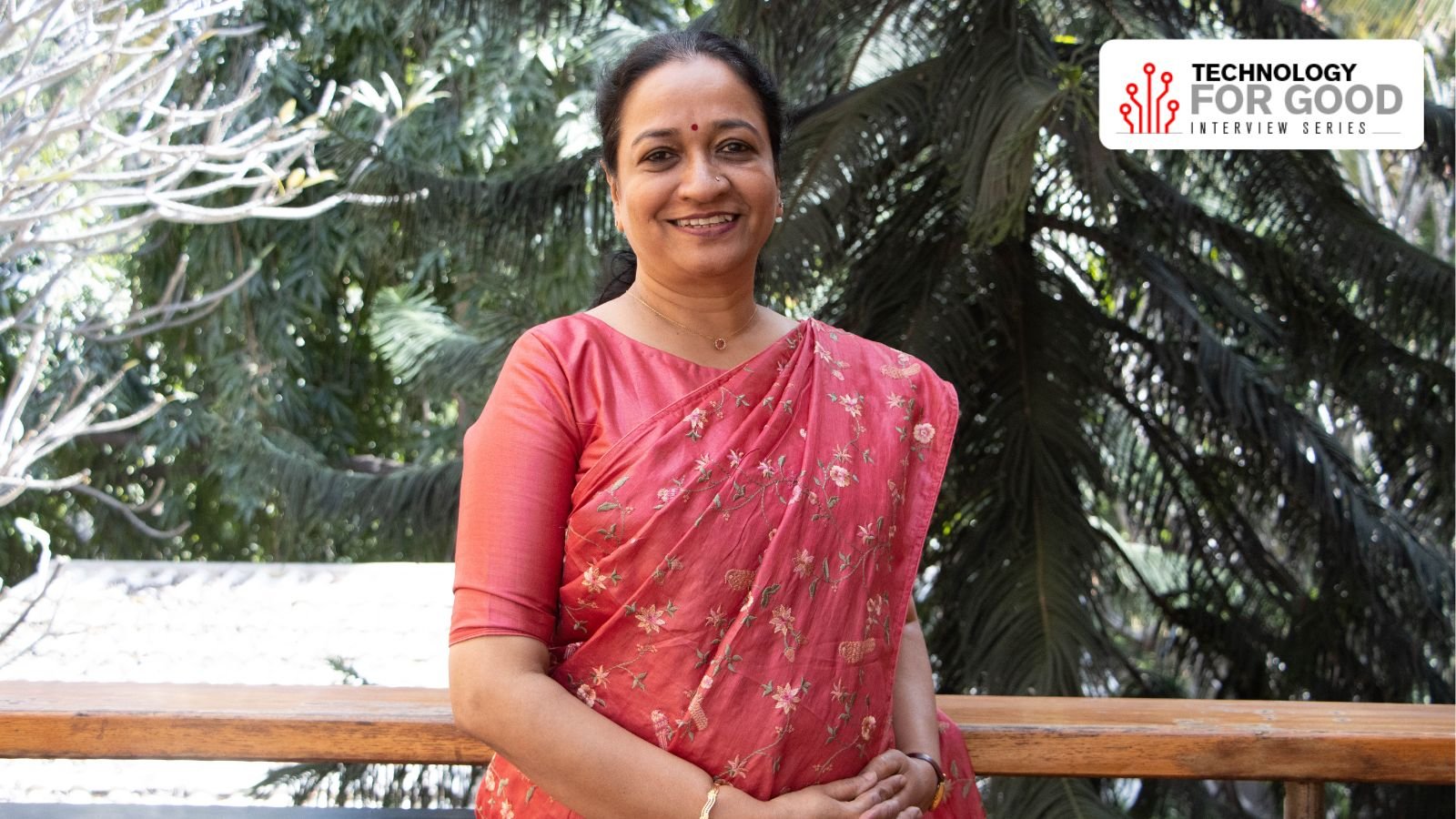
Dr Indu Murthy serves as the Principal Research Scientist and Head of the Climate, Environment and Sustainability Sector at the Center for Study of Science, Technology and Policy (CSTEP), a prominent policy think tank.
With over two decades of experience as a consultant scientist at the Indian Institute of Science (IISc), Bengaluru, her expertise encompasses climate change vulnerability, risk, resilience, adaptation, and sustainability.
Indu is an expert reviewer for the United Nations Framework Convention on Climate Change, focusing on the greenhouse gas inventory review process. Additionally, she is a member of the Commission on Ecosystem Management of the International Union for Conservation of Nature and the International Platform on Adaptation Metrics.
In a recent interview with indianexpress.com, Indu discussed climate adaptation technologies, global innovations that have not succeeded, the rising threat of heat stress, and necessary measures to mitigate flooding in Indian cities. Edited excerpts follow:
Venkatesh Kannaiah: What climate adaptation technologies are pertinent in the Indian context?
Indu Murthy: Technologies such as early warning systems (EWS), climate-resilient agricultural technology, and cool roofs combined with passive cooling for buildings are highly relevant in India.
The India Meteorological Department has been utilizing satellite data and IoT sensors to provide district-level heat and flood alerts, disseminated via SMS. These early warning systems exemplify effective climate adaptation technology.
EWS has proven beneficial in saving lives during cyclones that typically impact the coast of Odisha. However, the effectiveness of these warnings in prompting coordinated community action remains uncertain. Moreover, while the warnings are timely, flood alerts may not always be accurately mapped to flood-prone areas, often being based on heavy rainfall alerts that could lead to flooding.
In terms of agricultural technology, organizations like the International Crops Research Institute for the Semi-Arid Tropics (ICRISAT) and startups such as SatSure and Cropin utilize remote sensing and machine learning to provide crop-specific advisories to farmers engaged in rainfed agriculture, addressing both adaptation and resilience challenges.
Nevertheless, reliance on remote sensing and machine learning necessitates highly context-specific and localized approaches to cropping, considering various factors from soil moisture to conditions on neighboring farms, which may not be applicable to the small land parcels typical in India.
For urban cooling, reflective roof coatings combined with green roofs and cross-ventilation designs present a cost-effective and accessible method to mitigate urban heat island effects in Indian cities.
Venkatesh Kannaiah: Can you elaborate on your work at CSTEP?
Indu Murthy: At CSTEP, we engage with both state and city governments in the climate adaptation sector, generating data and evidence to support decision-making and policy development.
We analyze climate change impacts at the panchayat, district, and state levels to understand their real-world implications, such as heavy rainfall leading to floods, droughts, sea-level rise, and heat waves.
Furthermore, we assess vulnerabilities and potential risks that arise when hazards, exposure, and vulnerability intersect. For instance, the consequences of flooding can vary significantly between affluent areas and low-income settlements, influenced by exposure, adaptive capacity, and vulnerability. We generate evidence to inform decision-making processes.
We have assisted states like Kerala, Tamil Nadu, Karnataka, and Chhattisgarh in developing climate action plans, and our city-level initiatives are just commencing. We plan to work in Assam and are likely to address heat-related challenges in Nagpur.
In terms of heat adaptation, we have conducted detailed mapping of blue, green, and grey infrastructure in Bengaluru. Based on this, we are creating an ecosystem-based adaptation planning tool to identify optimal locations for introducing green cover and other adaptation measures, incorporating cost-benefit analyses of various interventions.
Venkatesh Kannaiah: What climate tech adaptations have failed globally, and why?
Indu Murthy: Numerous climate tech initiatives have struggled on a global scale. One example is Carbon Capture and Storage, which was once considered a potential solution but has seen many large-scale projects fail due to high capital costs, energy consumption during carbon compression, and challenges related to viable storage sites.
Another example is the innovation of floating solar panels, which, while adopted in Southeast Asia, has often disrupted aquatic ecosystems and affected the livelihoods of fishing communities.
Additionally, many smart city climate tech initiatives, such as sensor networks and real-time dashboards, have failed to translate into actionable policy or community benefits, resulting in data collection without subsequent action.
Venkatesh Kannaiah: Can you describe the climate adaptation and mitigation tech ecosystem in India?
Indu Murthy: India’s climate adaptation and mitigation tech ecosystem is evolving but remains uneven. Research institutions like CSTEP, the National Institute of Urban Affairs, and various IITs are producing credible science on urban heat, water stress, and agriculture.
The startup sector has also seen significant growth over the past five years, with companies focusing on air quality, climate risk, environmental monitoring, agri-climate analytics, and climate tech. However, there is a noticeable lag in clean energy funding.
Moreover, there are gaps in translating research into policy and a need for dedicated funding for climate adaptation rather than solely for mitigation.
Venkatesh Kannaiah: What are the emerging heat adaptation technologies in urban areas?
Indu Murthy: Several innovative areas are emerging for urban heat adaptation. Low-energy wearable cooling vests and phase-change material clothing are being developed for outdoor workers who face the highest heat exposure.
AI-powered urban heat island mapping is utilizing satellite thermal data and street-level sensors to pinpoint intra-city heat pockets with precision. Digital twin models are simulating the cooling effects of tree canopies, water bodies, and permeable surfaces before committing to large infrastructure investments.
Tech platforms for locating, managing, and monitoring public cooling centers during heat waves are being piloted in states like Rajasthan. On the regulatory front, reforms to the Energy Conservation Building Code (ECBC) aim to enforce design and material standards for cooling in new constructions.
However, a critical issue remains: ensuring equitable access to cooling solutions for low-income communities, street vendors, and construction workers, rather than limiting benefits to those with air-conditioned environments.