





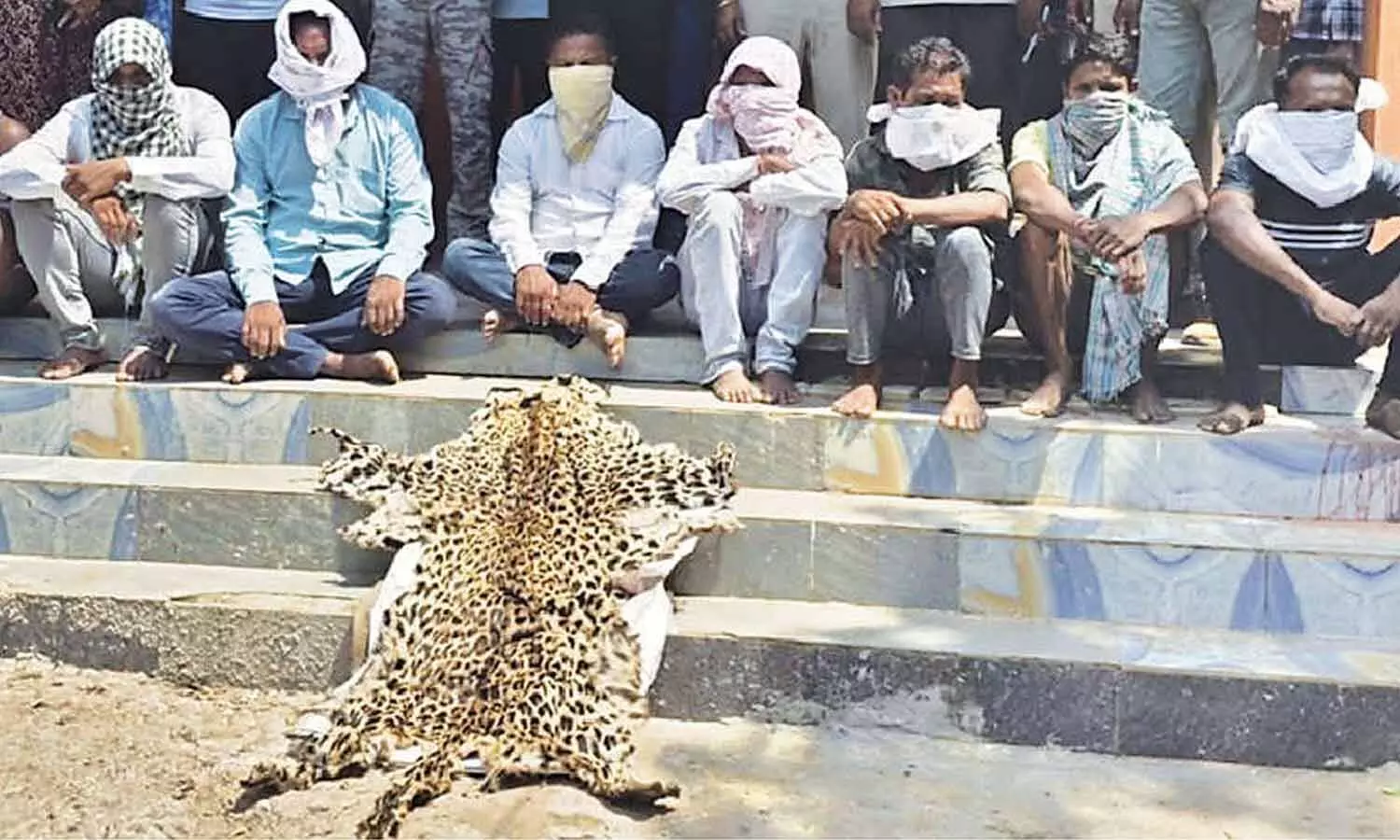
Rayagada: The recent seizure of a leopard skin and the arrest of eight individuals during an anti-poaching operation at Rivalkona under the Kalyansinghpur forest range have once again highlighted the issue of wildlife crime in southern Odisha.
While the Forest department has claimed success in intercepting an alleged illegal wildlife trade network, the incident also raises troubling questions about the effectiveness of wildlife protection measures in the region’s forested landscapes. According to forest officials, the leopard is believed to have been killed several months ago before its skin was allegedly transported through the Rayagada-Kalahandi corridor for sale. The fact that the animal could be poached and its skin moved across districts without detection indicates possible gaps in surveillance and intelligence gathering in vulnerable forest areas.
The case is particularly significant as forest sources acknowledge that nearly 10 leopard skins have been seized from Rayagada and surrounding areas over the past two years. Conservation observers argue that repeated seizures may suggest not only successful enforcement actions but also the ongoing existence of organized wildlife trafficking networks operating in the region.
Concerns have also been raised regarding the declining visibility of leopards in parts of Rayagada district. Areas such as Gumma reserve forest and sections of the Muniguda forest division were once known for regular leopard sightings. However, recent wildlife monitoring exercises reportedly failed to record any leopard presence through camera traps, prompting questions about the status of the big cat population.
The latest seizure has renewed calls for a comprehensive assessment of wildlife protection strategies in southern Odisha. Environmental observers believe that anti-poaching operations alone may not suffice unless they are accompanied by regular field patrolling, scientific monitoring, stronger intelligence networks, accountability mechanisms, and periodic rotation of field personnel in sensitive forest divisions.
The formation of multiple Forest department teams across Rayagada, Kalyansinghpur, Tikiri, Gunupur, Muniguda, and Kalahandi for the operation highlights the scale of the challenge. Investigators are now working to establish the exact origin of the leopard skin and identify others linked to the alleged trafficking chain.
As the investigation progresses, the incident serves as a reminder that wildlife crime remains a persistent threat to Odisha’s biodiversity and that stronger preventive measures may be necessary to protect the region’s remaining leopard population.