




From India’s 100th Ramsar Site and the new IIP series to NAeG 2026 and the Nilgiri Tahr population estimate, here are the key current affairs developments from June 1-7, 2026, relevant for UPSC Prelims and Mains.
Economy
The Ministry of Statistics and Programme Implementation (MoSPI) has released the new IIP series with an updated base year (2022-23). It has 2022-23 as the base year, as against 2011-12 in the old one, and updates various methodologies used in the compilation of the index. As per the new IIP, India’s industrial output grew by 4.9% in April, higher than the 3.2% growth recorded in March. The sectoral composition of the old IIP was Manufacturing, Mining & Quarrying, and Electricity & Gas Supply. To broaden the composition, the new series has added a new sector Gas Supply and Water Supply, Sewerage & Waste Management activities.
What are the changes in the new IIP 2026?
- In the Mining sector, the new series includes minor minerals and rare earth minerals in addition to major minerals, making the index more inclusive and representative of the sector.
- The Electricity Index is now compiled at a more disaggregated level based on the source of electricity generation: (i) Non-Renewable Sources and (ii) Renewable Sources.
- The revised basket consists of 1,042 products mapped to 463 item groups as compared to 839 items mapped to 407 item groups in the 2011-12 series.
Sector composition of IIP IIP 2026 (Base year 2022-23)
Old IIP (Base year 2011-12)
Manufacturing 76.062 77.633
Mining & Quarrying 11.053 14.372
Electricity & Gas Supply 10.865 7.995
Gas Supply and Water Supply, Sewerage & Waste Management activities 2.020 —
To attract foreign funds, the Centre has scrapped the capital gains tax, both long-term and short-term, on investment by Foreign Institutional Investors (FIIs) in government bonds. The withholding tax that FIIs pay on their interest income from these debt instruments is also scrapped. At present, FIIs pay 12.5% tax on long-term capital gains, 30% on short-term capital gains, and around 20% withholding tax on interest income. Capital gains tax is the tax levied on profits earned from selling capital assets such as shares, mutual funds, property, gold, or bonds.
Withholding tax, or WHT, is a tax collected at the source of income. It is paid by foreign investors on the interest they earn on their holding of Indian bonds. Instead of waiting for an investor or foreign company to pay taxes at the end of the financial year, the government requires the payer to deduct a portion of the income before it is remitted to the recipient. The deducted amount is then directly deposited with the government. In simple terms, whenever income is earned — whether through employment, investments, royalties or other sources — the government ensures tax collection in advance through withholding tax. A high withholding tax is seen as a major deterrent for foreign capital inflows at a time when India is grappling with rising external pressures, including a sharp surge in crude oil prices.
Events in News
World Environment Day 2026: It is celebrated on June 5 every year to raise awareness about degrading environmental conditions and to encourage people globally to take positive environmental actions, to help create a better future. The theme for this year is “Climate Action,” a recognition that awareness is no longer sufficient, and that the imperative is implementation.
World Yogasana Championship: Prime Minister Narendra Modi inaugurated the first World Yogasana Championship in Ahmedabad, Gujarat on 4th June, 2026.
Polity
National Panchayat Awards 2025
The awards, conferred by the Ministry of Panchayati Raj annually, recognise outstanding local rural bodies across the country for their contribution towards the Localisation of Sustainable Development Goals (LSDGs) and excellence in grassroots governance. This year, 42 panchayats from 17 states and union territories were selected for the two categories of awards – Deen Dayal Upadhyay Panchayat Satat Vikas Puraskar (DDUPSVP) and Nanaji Deshmukh Sarvottam Panchayat Satat Vikas Puraskar (NDSPSVP).
Out of the 42 panchayats, the maximum 6 were from Karnataka, followed by Andhra Pradesh (5), Kerala (4), Telangana (2) and Tamil Nadu (1). Odisha also stood among the best performers, with 5 panchayats from the state winning the awards.
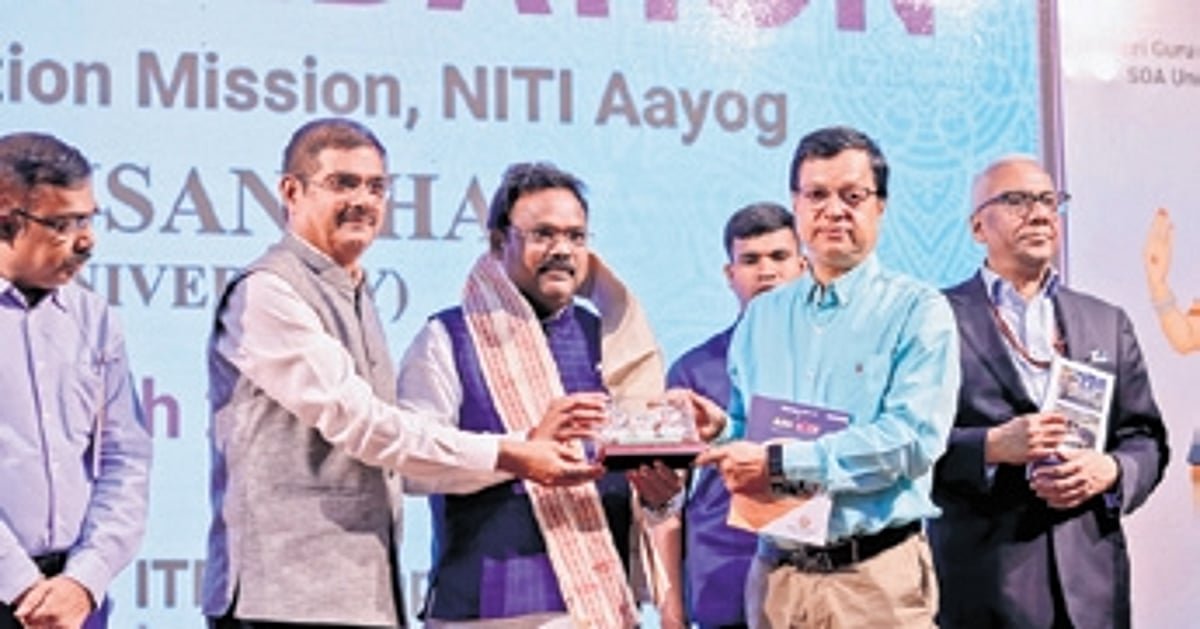
The Union government has named 17 projects of the Central, state, and local governments across the country as the winners of the National Awards for e-Governance (NAeG). Ten projects would be given the Gold Award, six would be awarded the Silver Award, and one Jury Award during the 29th National Conference on e-Governance (July 1-2, 2026) in Jaipur, Rajasthan. The theme of this year’s conference, “Viksit Bharat 2047: AI-Enabled, Data-Driven and Secure Digital Governance.”
NAeG Awards are presented every year to recognise and promote excellence in the implementation of e-Governance initiatives by the Department of Administrative Reforms and Public Grievances (DAR&PG), Government of India. These awards have been given since 2003. The winners of this year include the Agriculture Ministry’s platform for farmers, known as Agri Stack; the Consumer Affairs Ministry’s e-Jagriti platform for filing complaints; Panchayat Advancement Index (PAI) of the Ministry of Panchayati Raj and the Prayagraj Mela Authority’s conduct of the Mahakumbh 2025.
What is e-governance?
E-governance, or electronic governance, refers to using digital technologies such as the internet and other Information and Communication Technology (ICT) tools by governments to deliver public services, provide information and communication, conduct transactions, and promote active citizen participation in governance. The most important goal of e-governance is to improve transparency, accountability, and responsiveness.
International Cooperation
India-Indonesia
External Affairs Minister S Jaishankar and his Indonesian counterpart Sugiono held bilateral talks on 7th June as the two nations agreed to advance cooperation in defence, maritime security, digital connectivity and infrastructure. Jaishankar co-chaired the 8th India-Indonesia Joint Commission Meeting with Sugiono in New Delhi.
From the struggle against colonial powers, democratic traditions and pluralist culture, India & Indonesia share deep linkages. Independent India and Indonesia became chief votaries of the independence of Asian and African countries, the spirit of which led to the Bandung Conference of 1955 and later formation of NAM in 1961. Indonesia is a key pillar of India’s Act East Policy.
India-Nepal
India and Nepal completed the internal processes to enforce the mutual legal assistance pact to tackle “cross-border crimes”, as the visiting Foreign Minister of Nepal, Shishir Khanal, met External Affairs Minister S Jaishankar. This is the first official visit by the Nepalese Foreign minister after the new government led by PM Balendra Shah assumed office in March this year. Both Ministers welcomed the completion of internal processes for entry into force of the India-Nepal Mutual Legal Assistance Agreement in Criminal Matters (MLAA). This Agreement will benefit the people of India and Nepal by providing an institutional legal framework to enhance the effectiveness of investigation, prosecution and judicial proceedings relating to cross-border crimes. The ministers jointly launched the Peer-to-Peer (P2P) linkage between Unified Payments Interface (UPI) of India and National Payments Interface (NPI) of Nepal.