




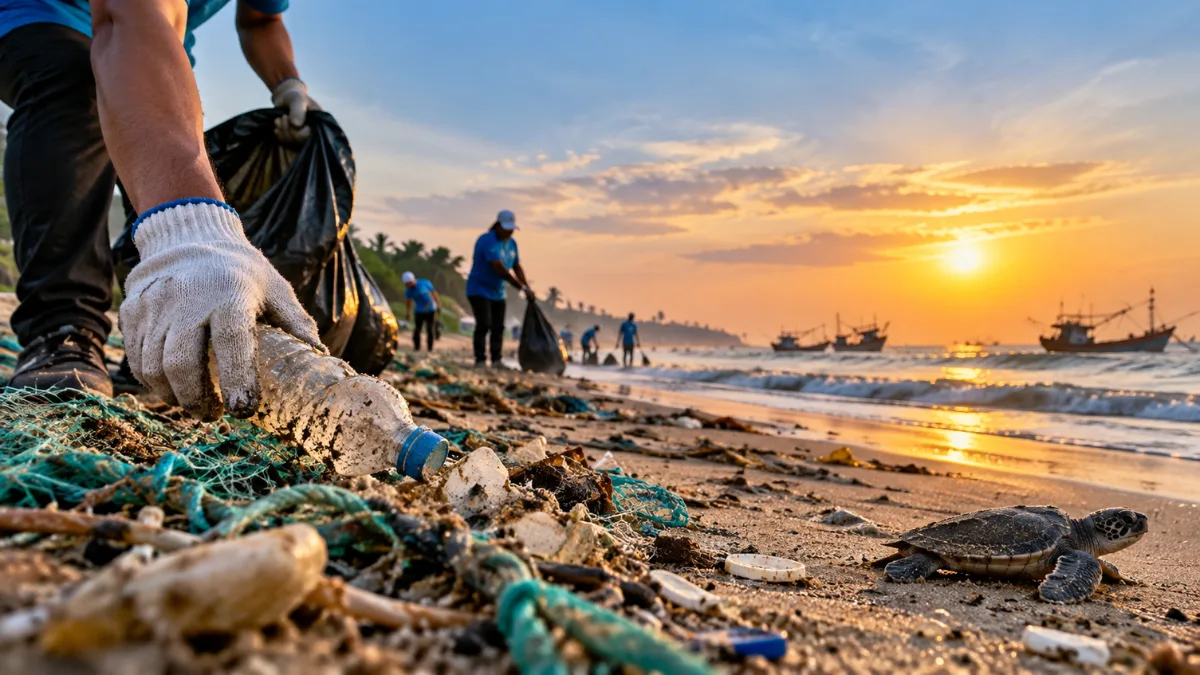
The fifth edition of a coastal initiative is set to engage students, fishermen, members of the armed forces, and volunteers through activities such as cyclothons, an Ocean Olympiad, and geo-tagged clean-up events, fostering a spirit of coastal conservation.
As dawn breaks along India’s 11,098 kilometers of coastline, a timeless rhythm resonates, reminiscent of the spice-laden ships that once frequented Malabar and the pearl divers of the Gulf of Mannar. However, today’s shores bring a different kind of tide, one that carries debris like tangled fishing nets and plastic waste, threatening marine life and the livelihoods of local fishing communities.
The ocean’s message, delivered through litter, reflects a growing environmental crisis that has gone largely unnoticed. For years, coastal management was treated as an afterthought, fragmented across various government departments and primarily reactive to disasters rather than proactive in daily stewardship. This oversight left ordinary citizens, from college students to shopkeepers, feeling disconnected from the responsibility of protecting their marine heritage.
The situation worsened as plastic waste infiltrated waterways, breaking down into microplastics that fish consume, ultimately entering the human food chain and posing serious health risks. Abandoned fishing gear and damaged marine habitats exacerbated the plight of coastal families reliant on fishing.
A pivotal shift occurred when the Modi Government recognized that cleanliness is a collective responsibility. Launched in 2014, the Swachh Bharat Mission emphasized the need for a nationwide movement, termed a Jan Andolan, to inspire citizens to take ownership of their environment.
Building on this momentum, the Ministry of Earth Sciences initiated the Swachh Sagar Surakshit Sagar campaign in 2022, aiming to galvanize public involvement in ocean conservation. This annual event coincides with International Coastal Cleanup Day, observed globally since 1986, attracting volunteers to engage in clean-up efforts along coastlines.
The campaign’s growth is evident; in its inaugural year, it reached 75 locations, but subsequent efforts expanded the initiative to 836 coastal sites with over 100,000 volunteers, showcasing the movement’s evolution. As we prepare for Swachh Sagar Surakshit Sagar 5.0 this September, the collaboration has broadened to include various ministries, the Indian Coast Guard, educational institutions, and community organizations, all working together for a cleaner ocean.
This year’s campaign promises to be unique, spanning from September 12 to 19, and will feature a series of events celebrating environmental stewardship. Activities will include a cyclothon along both coasts, fitness events, and an Ocean Olympiad focused on marine science, culminating in a massive clean-up on International Coastal Cleanup Day.
Participants will engage in creative competitions, eco-friendly initiatives, and the Bike-to-Beach campaign, encouraging a new generation to take pride in their contributions to ocean health. The clean-up effort will be meticulously documented using technology, allowing for real-time data collection and the issuance of digital certificates to volunteers, reinforcing their role as active citizens.
Central to this initiative are the personal stories of those directly impacted by ocean pollution, from fishermen facing diminishing catches to small business owners reliant on coastal tourism. For them, clean seas are not merely an environmental concern; they are vital for their livelihoods and the well-being of their families.