






On Disaster Preparedness Day, Odisha recalls the tragic events of the 1999 Super Cyclone and evaluates its current status in disaster management. The state’s rising population, along with diminishing green cover and shelter belts, has heightened its vulnerability to such natural disasters.
Situated in a region frequently hit by cyclones, Odisha has experienced numerous storms that have wreaked havoc on its densely populated coast. Out of 1,019 cyclonic disturbances recorded in the Indian subcontinent over the last century, 890 occurred along the eastern coastline, with 260 making landfall in Odisha.
In the past 25 years, Odisha has faced several major cyclones, including the catastrophic 1999 Super Cyclone, Phailin in 2013, Titli in 2018, and Fani in 2019.
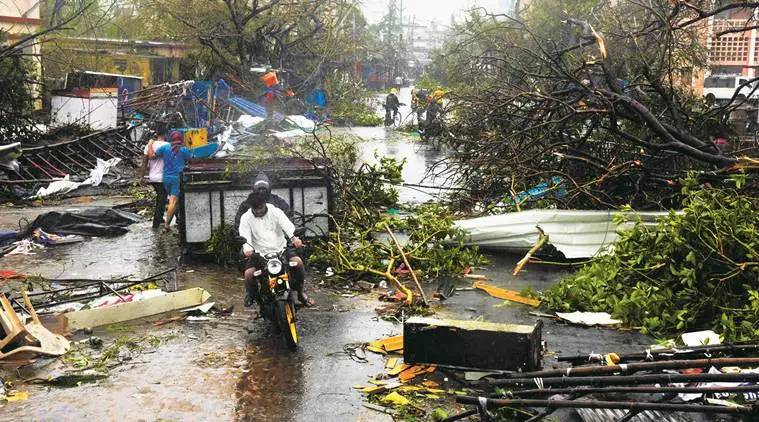
When the Super Cyclone struck in 1999, the wind speed measurement device was destroyed, but experts estimate the winds reached up to 300 km/h at landfall. This disaster impacted around 18 million individuals, resulted in approximately 10,000 fatalities, and devastated infrastructure and communication systems. At that time, the state lacked the necessary equipment to clear roads blocked by fallen trees, taking nearly two weeks to restore access with help from neighboring states.
A child born on that disastrous night has witnessed more cyclones in their 25 years than those born in the 1970s. Since the 1999 event, Odisha has established multi-tiered institutions and set new standards in Disaster Management. Challenges that seemed insurmountable in the late 1990s were effectively managed during subsequent storms like Phailin, Hudhud, Titli, and Fani, achieving the goal of Mission Zero Casualty—ensuring no loss of life.
Following the 1999 Super Cyclone, the state’s perspective shifted from merely viewing disasters as destructive events to recognizing the need for preparedness and risk reduction. Odisha took proactive steps to invest in sustainable development, becoming the first Indian state to establish a disaster management agency, the Odisha State Disaster Management Authority (OSDMA), ahead of the National Disaster Management Authority (NDMA) established in 2005.
The state government and OSDMA have consistently committed to disaster preparedness, identifying safe structures, constructing new shelters, planning evacuation routes, establishing protocols, and reinforcing coastal embankments.
Crucially, volunteer teams were created, and regular mock drills have been conducted annually in coastal areas. Training programs for masons, town planners, architects, and engineers focused on building safety, while educational institutions integrated disaster management into their curricula, fostering a culture of respect and responsiveness among communities during emergencies.
Learning from past experiences, Odisha has improved early warning systems, built over 800 multipurpose cyclone shelters, and developed more than 1,000 kilometers of evacuation routes and access bridges, while also strengthening embankments. These shelters serve dual purposes during non-emergency periods, functioning as schools and community centers.
In 2013, the state’s investments in disaster risk reduction were put to the test with Cyclone Phailin, where over one million people were evacuated in less than 48 hours—a remarkable achievement in disaster management. Similarly, when Cyclone Fani made landfall in Puri two decades later, the government successfully evacuated approximately 1.2 million residents to safe locations.
Whereas the response to the 1999 Super Cyclone was hampered by inadequate resources, today, Odisha has established its own Odisha Disaster Rapid Action Force (ODRAF) to manage crises both within the state and in other regions of India.
The state that once lacked even basic equipment for disaster response now possesses advanced tools for rapid tree clearance and material removal, as well as a network of volunteers and resources ready for action.
The Kalinga Stadium, which once served as a central hub for disaster relief, has been transformed into a premier sports venue, hosting events like the Champions Trophy hockey and the Asian Athletics Championships. Remarkably, just 72 hours before Cyclone Dana approached, the stadium was actively hosting a football match to demonstrate the state’s resilience in disaster management.
Today, relief supplies are strategically stored at local levels, ensuring that every district and panchayat is prepared before disaster strikes, thanks to accurate forecasts from the Indian Meteorological Department (IMD). Kalinga Stadium has evolved beyond a mere storage facility, becoming a symbol of Odisha’s effective disaster management practices and a state-of-the-art sports arena.
Years of meticulous planning and preparedness significantly reduced casualties during Cyclone Phailin, which was stronger than Hurricane Katrina at landfall. Although the government that first institutionalized disaster management lost the 2024 Assembly elections, successive administrations have continued to uphold the policies established for cyclone response.
Odisha’s journey reflects a continuous learning process, raising the standards for cyclone risk mitigation while seeking innovative technological solutions that are accessible to local communities. The state has become a beacon for both national and international entities in community-based disaster management, with a robust system in place to ensure Zero Casualty during emergencies. Locals now report that cyclones hesitate to affect them, as they have learned to coexist with these storms, which arrive annually as if on a pilgrimage.
This transformation was made possible through visionary leadership that recognized disasters as opportunities for rebuilding and improving Odisha’s identity from one of poverty to a thriving state. The legacy of the 1999 Super Cyclone has shifted from instilling fear to establishing Odisha as a global model for effective disaster governance.