





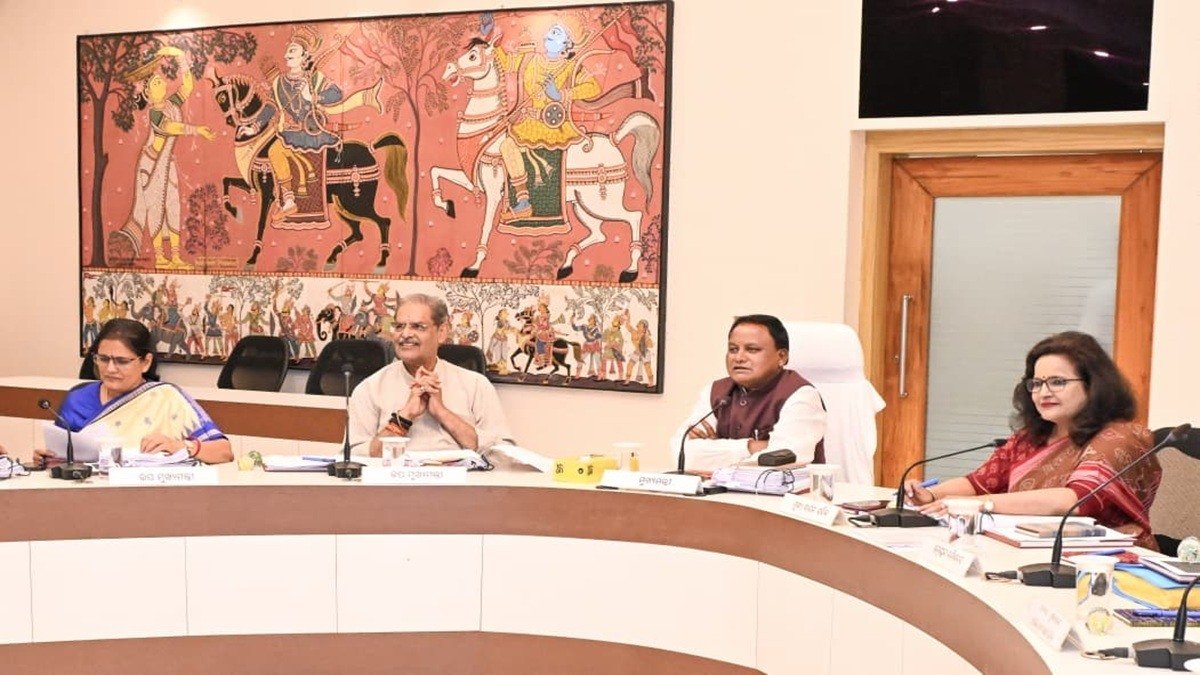
On Saturday, August 1, the Odisha cabinet endorsed a ₹2,995 crore livelihood program dedicated to tribal communities and approved a legislative bill to form ‘Economic Region Development Authorities’ (ERDAs) for systematic urban expansion throughout the state. These decisions were among 11 proposals ratified during a meeting led by Chief Minister Mohan Charan Majhi.
Chief Secretary Anu Garg announced that the cabinet has approved a bill to modify the Odisha Development Authority (ODA) Act of 1982, facilitating the creation of ERDAs in the region. This initiative aims to bolster urbanization as a key driver of economic development by planning the growth of urban clusters into integrated economic corridors equipped with modern infrastructure, job opportunities, effective transportation, and coordinated service delivery.
Garg emphasized, “Urbanisation is a major engine of economic growth and provides for the planned development of city agglomerations as integrated economic corridors with modern infrastructure, employment hubs, efficient mobility and coordinated service delivery.”
She outlined that Odisha has identified multiple urban clusters for this initiative, including:
- Bhubaneswar-Cuttack-Puri-Paradeep Economic Region (BKPPER)
- Bargarh-Jharsuguda-Sambalpur corridor
- Berhampur-Chhattrapur-Gopalpur agglomeration
- Jeypore-Koraput-Sunabeda region
An economic strategy has already been formulated for BKPPER as a pilot project in partnership with the National Institution for Transforming India (NITI) Aayog. Garg noted that developing region-specific economic plans will facilitate planning that transcends municipal borders, harness the complementary strengths of nearby urban centers, attract investments, generate jobs, and enhance living conditions, transportation, public services, and overall quality of life.
In a separate significant decision, the cabinet approved the Mukhya Mantri Janajati Jeevika Mission (MMJJM) 2.0, a livelihood project aimed at improving the socio-economic status of eight lakh tribal households, including Particularly Vulnerable Tribal Groups (PVTGs) across Odisha.
This mission will span five years, from 2026-27 to 2030-31, with a total budget of ₹2,995 crore, entirely funded by the state government. The first phase will be initiated in 13 districts, benefiting around 1.5 lakh tribal households.
The initiative focuses on increasing incomes and enhancing the well-being of tribal and PVTG families by endorsing sustainable agricultural, non-agricultural, and other livelihood activities through production clusters. Officials noted that the aim is to establish stable income sources rather than providing merely temporary assistance.
Garg mentioned that the Union Budget 2026-27 has acknowledged four city economic regions in the country as crucial for economic advancement, which includes BKPPER, alongside Varanasi in Uttar Pradesh, Surat in Gujarat, and Visakhapatnam in Andhra Pradesh. To effectively manage these economic regions, Odisha requires suitable administrative structures, hence the proposal for ERDAs.
The Odisha Development Authorities (Amendment) Bill, 2026, will establish a legal foundation for the creation, authority, and operations of ERDAs, aiming to facilitate coordinated and integrated regional development across the state. Additionally, the cabinet approved six initiatives from the Water Resources Department to enhance Odisha’s agricultural sector by broadening irrigation access and improving administrative efficiency.