




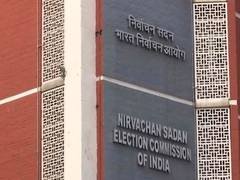
New Delhi [India], October 15 (ANI): The Election Commission of India (ECI) has instructed 17 States and Union Territories to carry out a Special Summary Revision (SSR) of their electoral rolls, establishing January 1, 2027, as the qualifying date for voters.
This initiative is being conducted under Section 21 of the Representation of the People Act, 1950, with the aim of refreshing the voter rolls and registering eligible voters.
The States and Union Territories involved in this revision include: Andaman and Nicobar Islands, Assam, Bihar, Chhattisgarh, Goa, Gujarat, Kerala, Lakshadweep, Madhya Pradesh, Manipur, Puducherry, Punjab, Rajasthan, Tamil Nadu, Uttar Pradesh, Uttarakhand, and West Bengal.
The ECI’s communication noted that the schedule for the Special Intensive Revision (SIR) in regions where it is currently underway or has recently concluded, such as Andhra Pradesh, Haryana, Karnataka, Maharashtra, Odisha, Telangana, and Delhi, will be revealed separately. Additionally, the timelines for Himachal Pradesh, Jammu and Kashmir, and Ladakh, where the SSR has not yet commenced, will be announced later, considering local weather conditions.
According to the timeline laid out, polling stations are to be rationalized by November 2. The draft electoral rolls are expected to be published on November 12, with a window for claims and objections open until December 11. These claims will be processed by December 28, leading up to the final electoral rolls being released on January 4, 2027.
The ECI has further directed that the Chief Secretary of each respective State or Union Territory ensure adequate support in terms of manpower and resources for the Chief Electoral Officer (CEO), District Election Officers (DEOs), Electoral Registration Officers (EROs), Assistant Electoral Registration Officers (AEROs), and Booth Level Officers (BLOs) involved in the electoral rolls’ preparation and revision. It is mandated that no positions designated as DEO, ERO, or AERO remain vacant during the SSR period, and any transfers of officials associated with the SSR process must receive prior approval from the Commission from the time the draft roll is published until the final roll is made public. Should a transfer be necessary, a detailed justification must be submitted to the Election Commission via the Chief Electoral Officer.
Moreover, the ECI emphasized that the Electoral Registration Officer for the relevant assembly constituency is accountable for ensuring that all eligible citizens are included while preventing any ineligible individuals from being added to the Electoral Roll.
“During the SSR, the CEO, DEOs, and EROs will ensure that every eligible individual, in accordance with Article 326 of the Constitution of India and Sections 16 and 19 of the Representation of People Act, 1950, is registered as a voter,” the ECI stated in its announcement.