




Bhubaneswar: The Housing and Urban Development (H&UD) Department of the Odisha Government has initiated a statewide strategy focused on the safeguarding, restoration, and monitoring of natural drainage channels, water bodies, and flood-retention zones to alleviate urban flooding, maintain natural drainage systems, and protect public infrastructure.
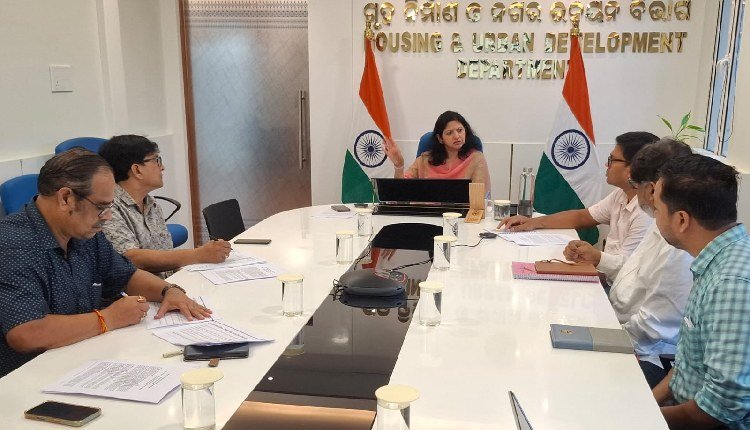
A meeting to deliberate on the proposed Standard Operating Procedure (SOP) took place on Tuesday, chaired by Usha Padhee, Additional Chief Secretary (ACS) of the H&UD Department, at Kharavel Bhawan’s conference hall in Bhubaneswar.
During this meeting, Padhee highlighted the importance of a unified and scientific method for safeguarding natural drainage systems and water bodies within Urban Local Bodies (ULBs). She instructed relevant authorities to systematically identify and map essential drainage channels, ponds, wetlands, and other flood-retention sites, with a special focus on areas vulnerable to waterlogging and flooding.
Padhee stressed the necessity of preserving natural drainage routes from encroachment, unauthorized filling, blockage, diversion, and alterations that could hinder the natural water flow. She also emphasized the need for effective collaboration among various departments and urban local entities to integrate drainage protection into urban planning and infrastructure projects.
The proposed SOP is founded on the principle of “No Net Loss of Natural Drainage and Flood-Storage Capacity,” which aims to ensure that developmental activities do not impede natural drainage connectivity or diminish the capacity of areas designed to hold excess rainwater.
The framework includes the identification, surveying, geo-referencing, and GIS-based mapping of vital drainage networks and water bodies across all ULBs in Odisha. These identified resources are intended to be incorporated into urban development plans, land-use strategies, and Comprehensive Storm Water Drainage Master Plans to enhance planning, development permissions, and flood management efforts.
The proposal also suggests establishing district-level committees and specialized enforcement task forces, potentially led by the respective Collectors, to oversee the identification, protection, restoration, and monitoring of natural drainage systems and water bodies.
Regular inspections, particularly prior to the monsoon season, along with digital documentation of encroachments and restoration initiatives, as well as periodic assessments, are planned to bolster accountability and enable timely action. The framework aims to strengthen interdepartmental collaboration to tackle drainage-related challenges and safeguard vulnerable regions.
Any development proposals impacting protected drainage routes and water bodies will be evaluated according to relevant statutory provisions and technical standards to ensure sufficient drainage connectivity and maintain flood-storage capacity.
This framework aspires to merge the protection of natural drainage systems with urban planning, land-use regulation, and infrastructure development. Its goals include minimizing preventable flood risks, safeguarding lives and property, and promoting safer, more sustainable, and climate-resilient urban areas throughout Odisha.
The SOP is presently in draft form and awaits consideration by the state government for approval and implementation mechanisms. Enforcement actions will follow the applicable laws and regulations.
Among the attendees were Arindam Dakua, Director of Municipal Administration (DMA); Bhagyadhar Mohanty, Chief Engineer-cum-Additional Secretary; the Engineer-in-Chief (Drainage) from the Water Resources Department; town planners; and other relevant officials.