






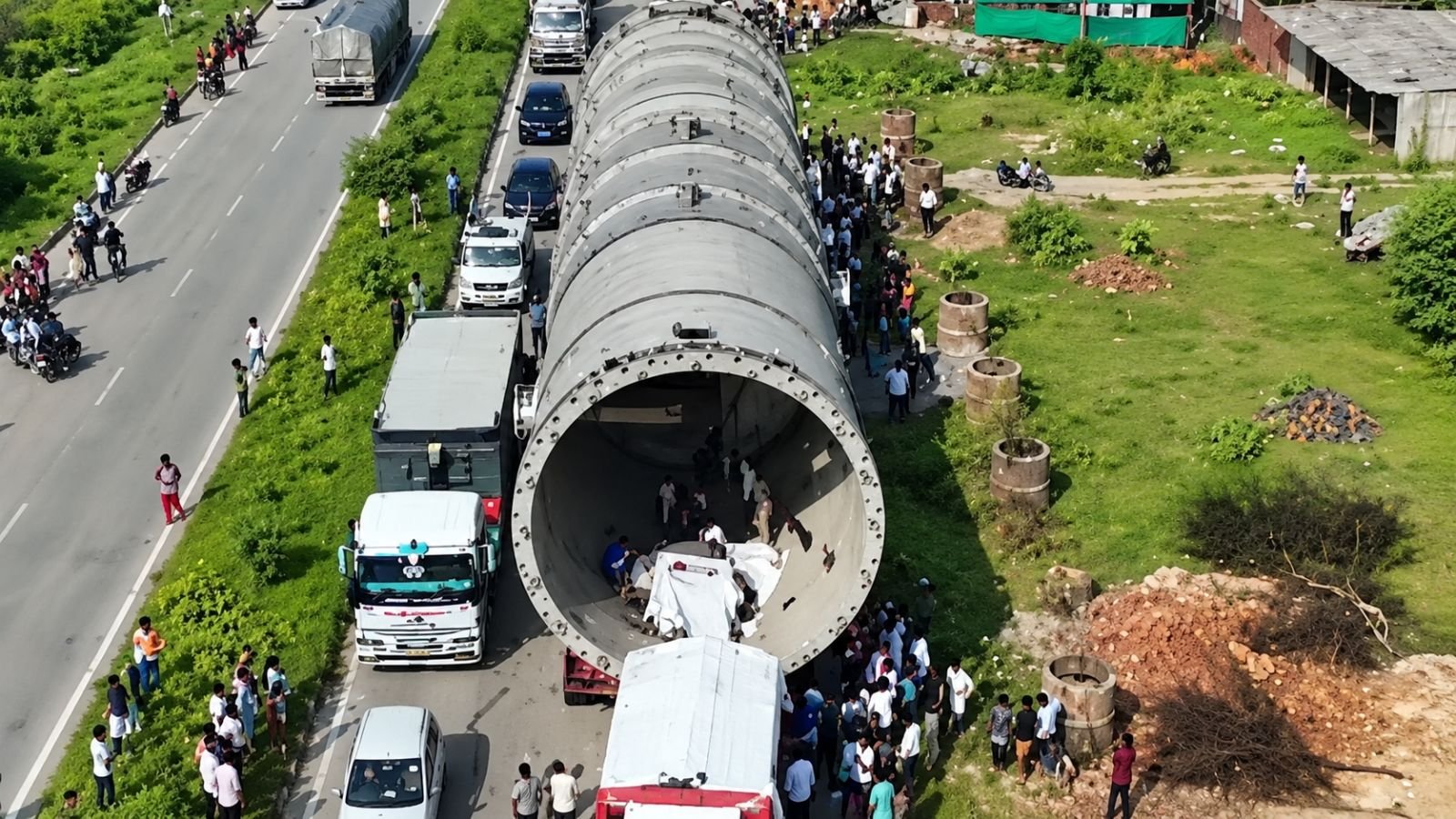
Electrical wires were raised and routes cleared as a colossal 147-foot-long reactor made its way from Paradip Port in Odisha, traveling at an average speed of 10-12 km per day, costing more than Rs 15 crore. The installation process has commenced at Kumbhi, with operations anticipated to start in November.
After nearly six months of navigating challenging roads, overhead wires, and obstacles from overbridges, this enormous reactor, essential for India’s inaugural integrated sugar-to-bioplastic plant, arrived in Lakhimpur Kheri, Uttar Pradesh, late Thursday night.
The reactor, transported on a 260-wheel trailer, reached Balrampur Chini Mills’ Kumbhi facility following a meticulous journey through four states and seven districts in Uttar Pradesh, covering close to 1,300 km at an average pace of just 10-12 km daily. This significant arrival is a vital step towards launching the company’s integrated polylactic acid (PLA) plant, which is set to commence operations in November.
Sunil Kumar Yadav, the Chief General Manager at the Kumbhi unit, shared with The Indian Express that the company had been preparing for the machine’s arrival for six months. He confirmed that installation was underway and that they expect to begin operations next month.
Details of the Reactor
The cyclisation reactor is a crucial part of the facility designed to transform sugarcane into polylactic acid (PLA), a biodegradable polymer used in producing bioplastics. This plant will be integrated with the existing sugar mill, consolidating various production stages in one location.
The transportation of such a large consignment posed significant logistical challenges. The machinery, which stood around 20 feet tall, measured approximately 147 feet in length and 23 feet in width. A specialized team of about 35 trained personnel from a Mumbai-based company accompanied the reactor throughout its journey.
Journey to Kheri
A senior technical official traveling with the reactor informed The Indian Express that numerous overhead electrical wires had to be raised and obstructions on overbridges cleared to facilitate its movement. In areas where the roads were too narrow, temporary paths were created using heavy iron sheets to enable the trailer’s passage.
Prior to the departure from Paradip Port, engineers conducted a meticulous route survey through Odisha, Jharkhand, Bihar, and Uttar Pradesh to identify potential obstacles and evaluate road and bridge conditions. Local district administrations collaborated with the National Highways Authority of India (NHAI), the Public Works Department, local police and traffic authorities, municipal bodies, forest officials, and electricity providers to ensure smooth transport.
Transportation alone incurred costs around Rs 15 crore, with the task awarded to a transportation firm based in Mumbai.
From Sugarcane to Bioplastic: A First for India
Yadav elaborated on the production process, stating that sugarcane will serve as the raw material for generating lactic acid, which will subsequently be converted into PLA. This polymer will then be turned into pellets that industries can use to create a variety of products.
PLA is a biopolymer derived from renewable resources like sugarcane, cornstarch, and other plant-based materials, offering an eco-friendly alternative to traditional plastics that are petroleum-based, with applications in packaging and textiles.
The integrated design of the Kumbhi facility will allow sugarcane processed at the existing mill to act as feedstock for the biopolymer production.
Balrampur Chini Mills Limited has committed Rs 3,080 crore to this project, which will be implemented in phases over approximately two-and-a-half years.
An official indicated that the proposed greenfield facility aims to have an annual production capacity of 80,000 tonnes, positioning it as India’s first large-scale PLA manufacturing plant.
Additionally, the project features a Zero Liquid Discharge system to prevent the release of industrial effluent.
With the reactor now installed at the Kumbhi site and assembly in progress, the next significant goal is to commission the plant, expected to begin operations in November.