





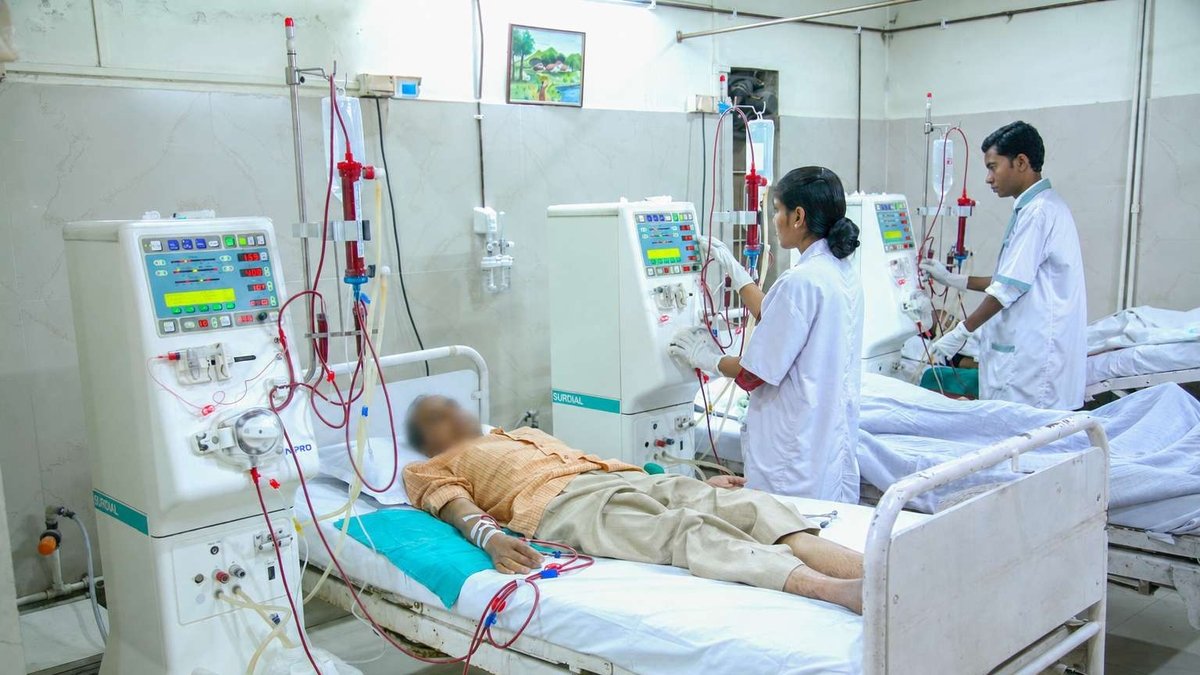
Tamil Nadu is poised to enhance renal healthcare accessibility via a Public-Private Partnership (PPP) with its government. Eskag Sanjeevani is set to introduce 160 state-of-the-art dialysis machines across 32 locations, with operations expected to commence early next year. Each center will house five machines, collectively supporting over 1,500 dialysis treatments monthly, thereby broadening the availability of these services throughout the state.
The region faces a kidney failure incidence rate of 350 patients per million, significantly higher than the national average of 250, representing a 40% increase. Each patient typically requires three dialysis sessions weekly, which places immense strain on the current healthcare framework. Hence, this expansion is not merely a growth initiative but a pressing medical necessity.
The new dialysis centers will be established in Thoothur, Kulathur, Eral, Pathamadai, M. Pudupatti, Vasudevanallur, Kanniseri Pudur, Paralachi, Kallupatti, Sayilkudi, Maravamangalam, Utchapuli, Viruveedu, Sendhurai, Kallimanthayam, Dombucherry, Akkur, Thirupoondi, Koothanallur, Tharamangalam, Thammampatti, Marandahalli, Kallavi, Melvisharam, Vaduganthangal, Pudupettai, Nemam, Pavunjur, Kundrathur, Katchur, and Eguvarpalayam. These sites are primarily semi-urban or rural areas currently lacking sufficient dialysis facilities.
What makes Tamil Nadu and Andhra Pradesh particularly susceptible to chronic kidney disease (CKD) is the unique profile of their patient demographics. In contrast to many other states in India where diabetes and hypertension are prevalent triggers for kidney failure, patients in these regions often develop end-stage renal disease without these conditions. Contributing factors include outdoor labor under extreme heat, groundwater contamination with heavy metals, and pesticide exposure. Consequently, a younger, working-age demographic is forced into lifelong dialysis reliance without any preventable causes.
Despite Tamil Nadu’s leadership in the country’s dialysis infrastructure with over 4,400 machines, nearly 90% are situated in urban areas. Patients residing in Kallupatti or Viruveedu face the challenge of traveling for hours three times a week to access this crucial healthcare, risking complications and even death if they miss a session. The establishment of Eskag Sanjeevani’s 32 new centers specifically targets these underserved communities, allowing patients to receive treatment closer to home for the first time. This localized access enables them to maintain work schedules while attending necessary dialysis sessions, alleviating the economic and caregiving pressures on their families.
Reducing travel distances is not merely a matter of convenience; it significantly enhances clinical outcomes. Patients who travel less are less likely to miss appointments, leading to improved longevity.
The rollout in Tamil Nadu is a part of Eskag Sanjeevani’s broader mission across India, focusing on establishing healthcare facilities where the disease burden is highest and access is most limited. In various states such as West Bengal, Odisha, Jharkhand, Bihar, Uttar Pradesh, and Tripura, the gap can reach as high as 14 new end-stage renal disease (ESRD) patients for each available machine annually, indicating a severe shortage. The organization’s current network, comprising over 750 machines, serves more than 5,000 patients and facilitates over 55,000 dialysis sessions each month, with Tamil Nadu’s semi-urban regions now integrated into this government-supported, community-focused renal care framework.
An Eskag Sanjeevani spokesperson commented on the expansion, stating, “For dialysis patients, treatment is not occasional; it is a lifelong necessity that demands consistency and timely access. So, it is our mission to ensure that quality dialysis care reaches every district in India.”
For additional details, visit Eskag Sanjeevani or learn more about the dialysis network at Eskag Sanjeevani Dialysis.