



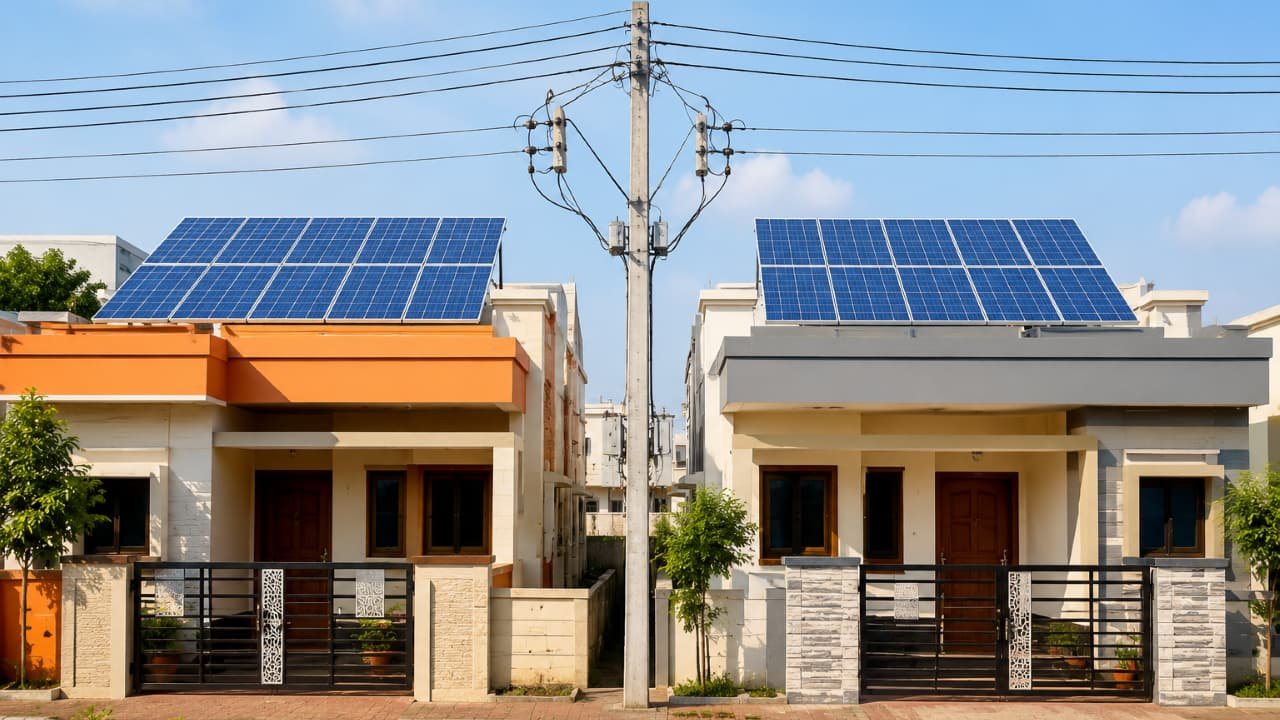
Farmers and women’s self-help groups in Odisha are increasingly adopting solar-powered equipment to tackle the challenges posed by inconsistent electricity supply, aiming to lower expenses and boost agricultural earnings.
In Bairagiput, a village within the Koraput district, farmers have traditionally relied on monsoon rains or diesel motors for irrigation. Meanwhile, women’s groups in Kalahandi have faced delays in food processing due to unreliable power sources. The introduction of decentralized renewable energy (DRE) is now helping to fill the gaps left by conventional electricity.
Amara Lakei, a 35-year-old farmer and ASHA worker in Bairagiput, has experienced difficulties with irrigation due to electricity shortages. In 2024, a project supported by PRADAN and HDFC provided her community with solar motors, sprinklers, pipes, and solar fencing to safeguard crops.
Increased Crop Yields with Solar Technology
Madan Burud, a 35-year-old farmer managing two acres, previously depended on diesel irrigation. After receiving a solar motor three months ago, he reported a rise in household income from Rs 40,000 from ginger in the previous year to Rs 70,000 in the 2026 season. Traditional motors consume one liter of diesel per hour, and irrigation is typically needed two to three times weekly.
Similarly, Gopinath Sisha, 26, noted that his fuel costs had been around Rs 20,000 before he installed a solar motor in 2023. His bean sales increased from Rs 1 lakh to Rs 1.5 lakh, while the price for ginger rose to Rs 180 per kg from previously lower rates. Sisha has cultivated beans, cabbage, tomatoes, brinjal, chilies, coriander, and potatoes for a decade.
Women’s self-help groups in the Nandapur block have also embraced solar drying technology for agricultural processing. In Kurji village, one such group implemented solar dryers to process ginger, effectively reducing post-harvest losses.
Ulash Khinbudi, a community resource person aged 27, shared that smaller ginger, which once sold for Rs 8-10 per kg, now commands Rs 40, while larger ginger is priced at Rs 140, a significant increase from Rs 20-30. Approximately 40 women work in shifts at this processing unit.
Since 2018, PRADAN has collaborated with technology providers to set up seven drying units across three villages. Each unit is equipped with electric cutters, fan-based dryers, and solar dryers, capable of processing 50 kg batches of ginger in 3-4 hours, according to a 2026 study by WRI India.
Continuing Electricity Challenges in Rural Regions
In Bairagiput, residents have faced daily power interruptions of two to three hours for decades. Farmers have found it difficult to install motors due to the distance of electric poles from their fields, and procuring diesel requires travel to Nandapur or Sehliguda.
The irrigation setup now includes four solar motors, sprinklers, and pipelines, benefiting clusters across two villages and supporting 20-30 acres of farmland. Around 20 individuals are involved in this initiative.
In the Thuamul Rampur block of Kalahandi district, the Jai Durga SHG, a group of 10 women, utilizes solar panels and battery storage for their food processing needs. They supply nutritional food to Anganwadi centers across eight gram panchayats under the ICDS program.
Sourajini Singh, the former president of the group, aged 65, noted that their electricity bill decreased after the installation of solar panels and batteries. The SHG received four 200 Ah batteries, one 3.5 kilowatt inverter, four solar panels, and a rice puff extruder.
“We no longer have to travel 40-45 kilometers to Bhawanipatna for puffed rice and roasted ingredients,” Singh stated. However, their monthly electricity bill has increased to Rs 650-800 due to the use of packing and sealing machines not powered by solar energy.
Despite the solar initiatives, Singh mentioned that power outages lasting between 2 to 6 hours are still frequent, sometimes extending up to 15 days during the monsoon season. The quest for reliable electricity continues to be a significant concern for these communities.