



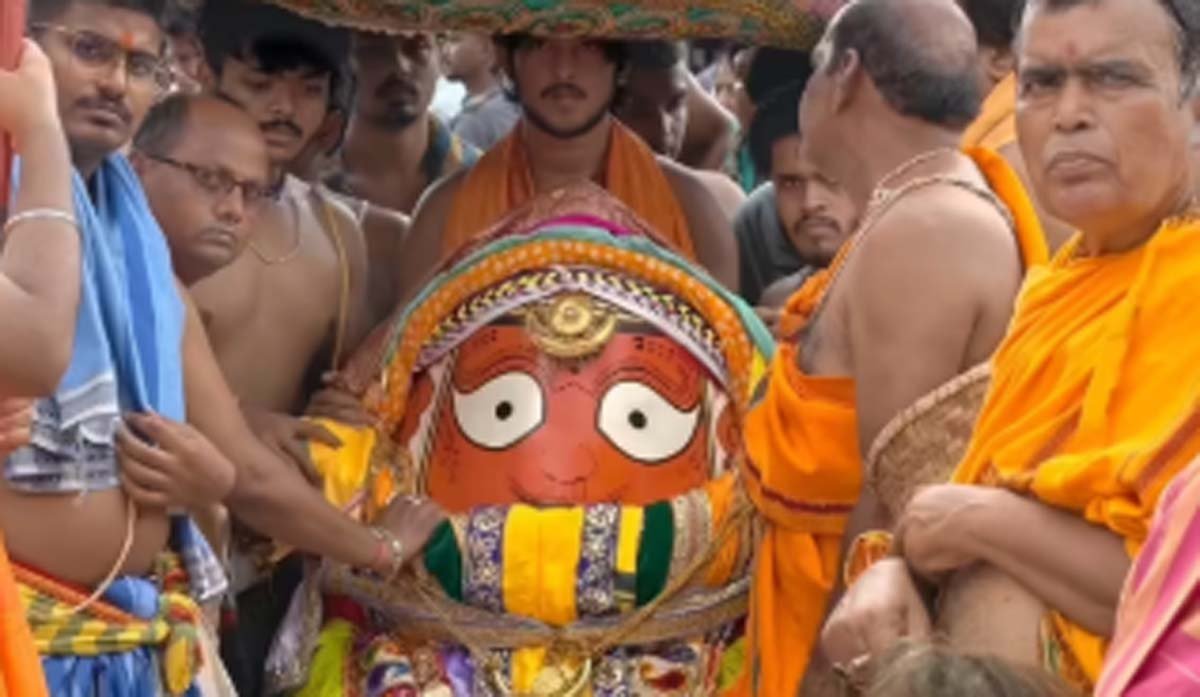
Keonjhar: A remarkable gathering of more than 50,000 devotees took part in the Rath Yatra of Lord Sri Sri Baladevjew on Thursday, one of Odisha’s most ancient car festivals. The participants pulled the towering 72-foot chariot, known as Nandighosha, which carries Lord Baladevjew, Devi Subhadra, and Lord Jagannath along a 1-kilometer stretch of Bada Danda, from Sri Baladevjew Temple to Sri Gundicha Temple.
The atmosphere on Grand Road was electrifying, transforming into a bustling sea of devotees eager to catch a glimpse of the deities. A unique aspect of this festival was the display of Devi Subhadra’s idol, which is red in Keonjhar, contrasting with the yellow idol typically worshipped in Puri and other regions.
Earlier in the day, the priests and servitors conducted a ceremonial procession, carrying the deities from the temple to the chariot, accompanied by the rhythmic beating of drums, the sound of conch shells, and the performance of traditional musical instruments. Collector Vishal Singh and SP Nitin Kushalkar oversaw the comprehensive security measures in place for the celebration.
The Keonjhar Ratha Yatra is notably characterized by its deep-rooted tribal connections. Historians highlight the significant role of the Bhuyan tribe, which was instrumental in the establishment of the former Keonjhar kingdom, as they have traditionally participated in royal and religious events. Tribal community members continue to provide ropes made from the siali plant, gathered from nearby forests, for pulling the chariot.
Numerous tribal devotees from the hilly and forested areas of the district arrived in Keonjhar ahead of the festival, bringing along fruits, vegetables, and other forest products to sell along Bada Danda. In times past, tribal groups would remain on Grand Road throughout the return journey of the deities, spending their days and nights engaged in singing, dancing, and playing traditional drums, fostering a strong sense of community and faith. This occasion also served as a venue for young men and women to find potential life partners. However, many of these customs have diminished over time due to evolving social norms, security issues, and urban influences.
The Sri Baladevjew Temple, constructed in the 16th century by King Laxmi Narayan Bhanj, is regarded as the second-most significant Jagannath temple in Odisha after the one in Puri. Unlike the Puri Ratha Yatra, where the sibling deities are transported on three distinct chariots, in Keonjhar, all deities share a single chariot, Nandighosha. Historians note that the chariot was originally taller, but its height was reduced over the years due to a lack of appropriate timber.