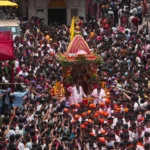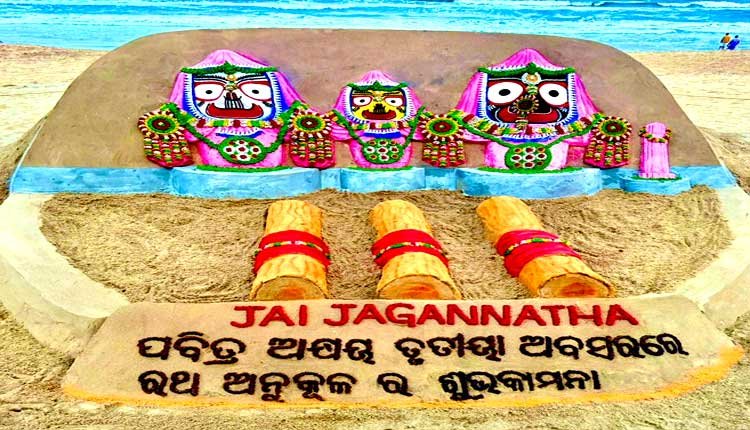






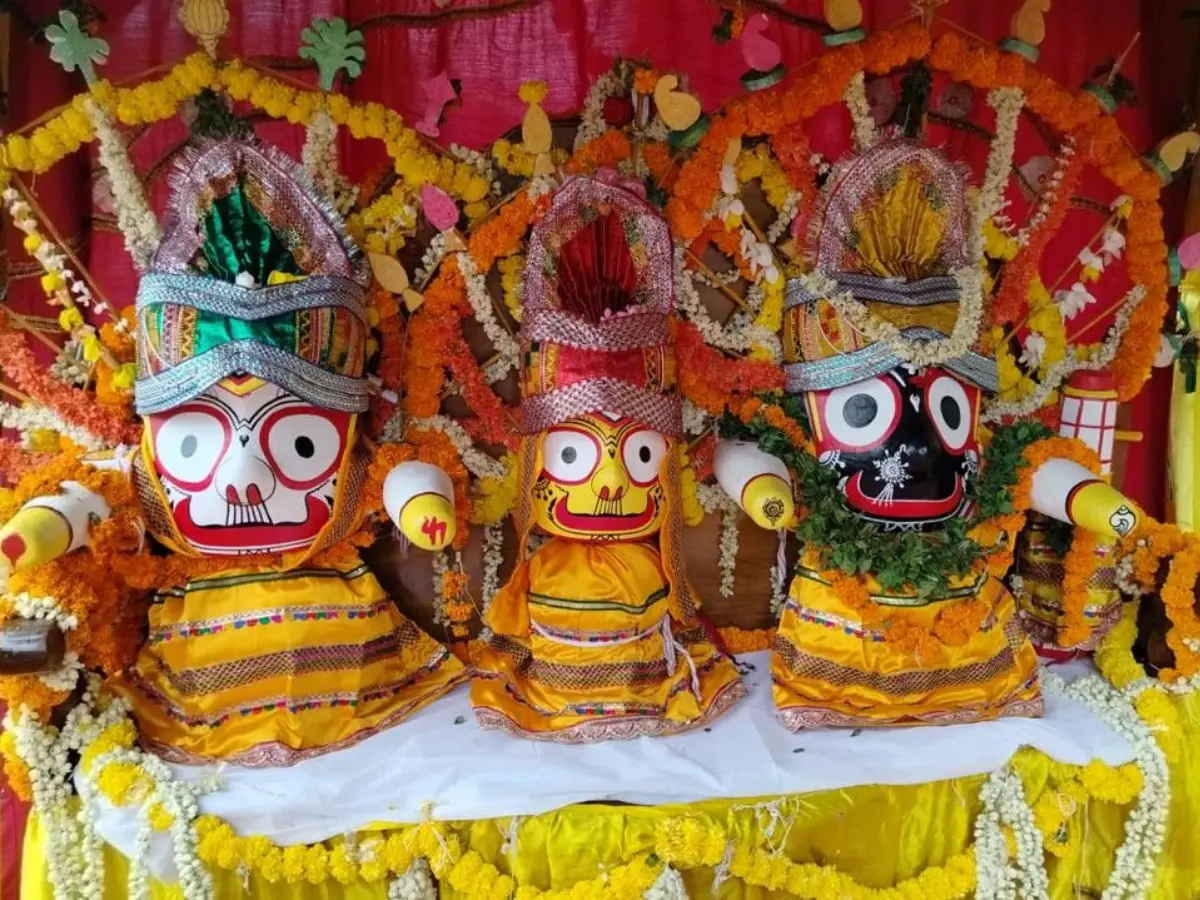
The Rath Yatra in Puri, a globally celebrated event, commences today, ushering in a spectacular nine-day chariot festival. Devotees flock to pull the enormous wooden chariots of Lord Jagannath, alongside his siblings, Balabhadra and Subhadra, as they journey to their aunt’s residence at the Gundicha temple. However, a fascinating legend suggests that, in ancient times, this festival featured six chariots rather than the three we see today.
According to the legend, a river called Malini once flowed along the grand road, known as Bada Danda, which spans approximately 3.5 kilometers and serves as the route for the chariots. In the past, three of the chariots were utilized to transport the deities to the riverbank, where they were carried across the water, before three additional chariots took them to the Gundicha temple.
In contrast to this year’s festivities, the ancient Rath Yatra involved pulling six chariots from the Srimandir to the riverbank, and then three chariots from the riverbank to the Gundicha temple. After crossing the river via a temporary bridge, the deities were placed on the chariots that awaited them on the opposite side, which were then pulled to the Gundicha temple.
Previously, during their stay at the Gundicha temple, the Holy Trinity would only reside there for three days, while the remaining six days were dedicated to acclimatizing to the journey. Additionally, pulling six chariots along sandy terrain posed significant challenges for devotees. A turning point occurred when Saradha Devi, the spouse of King Gajapati Narasingha Dev, dreamt that Lord Jagannath instructed her to eliminate obstacles from the Rath Yatra. Following this vision, the mouth of the Malini River was sealed, filling it with sand, an area now referred to as Banki Muhana. This location is also known as Saradha Setti or Saradha Baali, where devotees place the sacred sand on their heads, anoint themselves with it, and immerse themselves in devotion to Mahaprabhu.
Presently, the Malini River has either dried up or shifted course, resulting in a continuous 3.5 km Grand Road. Consequently, starting in the 13th century, during the reign of King First Bhanudev, the festival evolved to feature only three grand chariots for the entire procession.
The three sacred chariots utilized in the Rath Yatra collectively possess 42 wheels, with each chariot being distinct in its dimensions and design. Lord Jagannath’s chariot, named Nandighosha, has 16 wheels, Balabhadra’s chariot, known as Taladhwaja, contains 14 wheels, while Devi Subhadra’s chariot, referred to as Devadalana or Darpadalana, is equipped with 12 wheels. These impressive wooden wheels measure approximately seven feet in diameter. Each chariot uniquely represents one of the deities and varies in height, color, and wheel count.
The main Rath Yatra procession commenced on July 16, 2026, falling on the second day (Dwitiya) of the Hindu lunar month of Ashadha. Thousands of devotees pull the three massive wooden chariots using thick ropes. The tallest chariot, dedicated to Lord Jagannath, reaches around 45 feet in height.
The deities travel from the historic 12th-century Jagannath Temple to the Gundicha Temple, where they remain for nine days. The festival began on July 16, with the return journey of the deities to their original temple scheduled for July 24, 2026.