





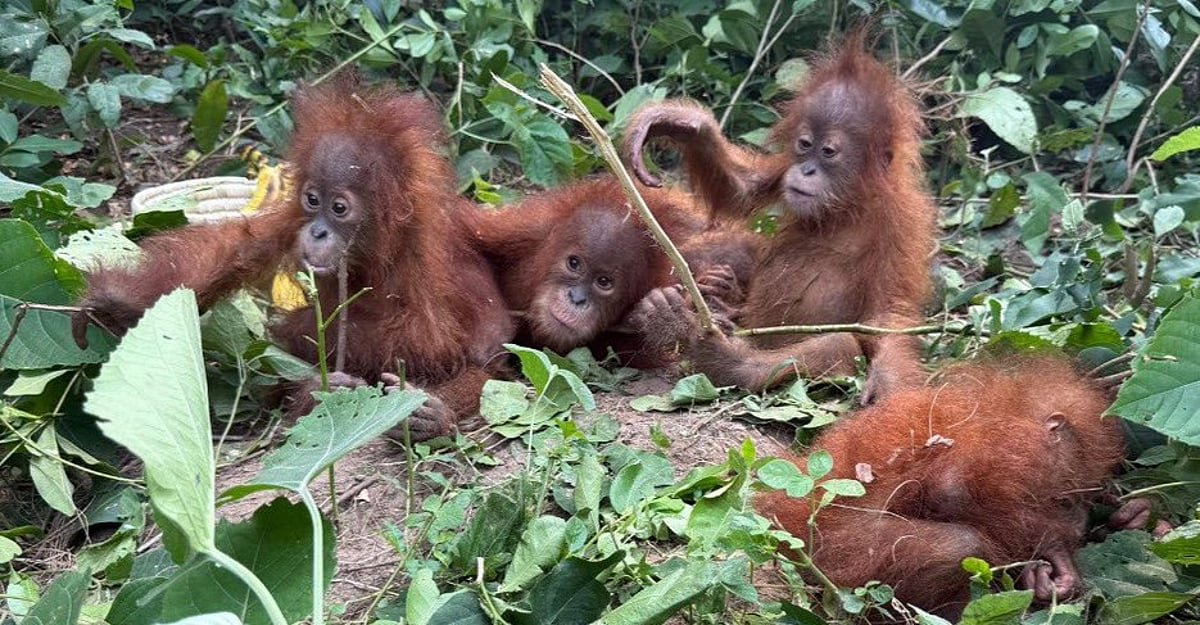
BHUBANESWAR: The orangutan infants rescued from the Bichitrapur forest in Balasore district and currently receiving care at Nandankanan zoo are demonstrating familiarity with humans, which experts believe points to a background in captivity.
Aditya Acharya, head of the Centre for Wildlife Health (CWH) at OUAT, stated that the infants’ comfort in interacting with their caretakers suggests they have previously been exposed to human care.
“Had these orangutan babies not been in captivity, they would have shown some kind of fear when approached by humans. However, they have shown no such signs since the very first day of their rescue and shifting to a new environment. This shows that they have been raised in captivity for quite some time prior to their shifting (smuggling) to Odisha,” Acharya noted.
Acharya, who is part of a technical team formed by the state wildlife wing to oversee the care of these young orangutans, mentioned that they are gradually becoming more accustomed to their caregivers at the Centre for Rearing Animal Babies at Nandankanan, though they remain in quarantine.
The care of the animals is being provided by three dedicated caretakers who feed them milk, fruits, and other fluids every two hours, following a dietary plan developed in consultation with experts.
According to sources, one of the infants is experiencing mild fever and is currently under veterinary treatment. Blood tests and DNA profiling for the rescued orangutans will be conducted at a later date.
The five orangutans were rescued from Bichitrapur forest in the Bhograi block of Balasore on September 8. The Special Task Force (STF) of the Crime Branch has intensified its investigation into the incident, with the Wildlife Crime Control Bureau (WCCB) also involved in the inquiry.