



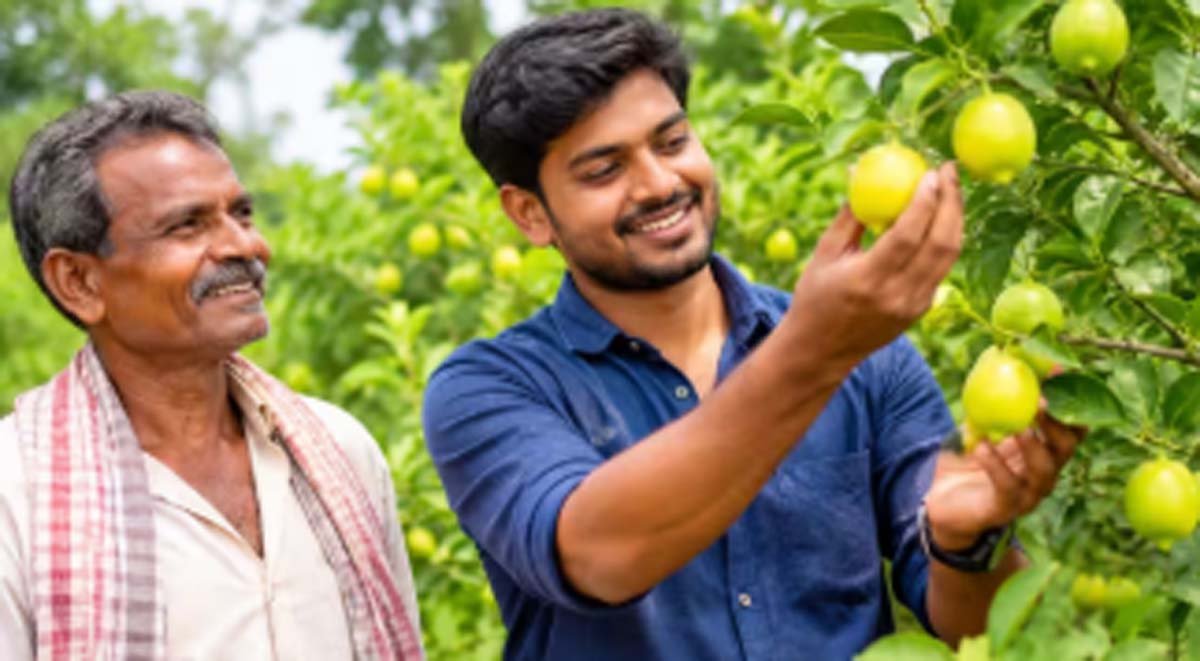
Persistent damage to his crops by elephants and monkeys posed a significant challenge for Kartika Sahu in Ogi village, located in Odisha’s Angul district. Faced with these adversities, he opted for a different agricultural approach. Approximately 15 years ago, he purchased 50 local lemon saplings from the horticulture department at Rs 2 each, amounting to a total investment of merely Rs 100.
This initial venture, aimed at protecting his crops from wildlife, unexpectedly turned into a profitable enterprise for fellow farmers in the village. Today, his son, Santosh Sahu, has transformed that modest project into a flourishing business with an annual revenue exceeding Rs 1 crore. He cultivates lemons on his own land, procures fruit from over 200 farmers, and distributes it to various markets throughout Odisha and beyond to Jharkhand. The Kagzi lemons from Ogi have even reached international markets, including the United States and the United Kingdom. As reported by 30Stades, Santosh’s venture encompasses lemon cultivation, procurement, and trading. A separate report from Odisha TV, published on November 10, highlighted the remarkable journey of the Sahu family, illustrating how a mere investment of Rs 100 evolved into a business catering to both domestic and international markets.
Beginning of a Rs 100 Venture
The Sahu family’s journey commenced with ongoing losses from their crops. According to 30Stades, elephants and monkeys from the nearby Panasha Taila forest frequently destroyed Kartika’s paddy and groundnut yields. To combat this issue, he turned to indigenous Kagzi lemons, which, due to their strong citrus scent, sharp thorns, and unique flavor, are less appealing to these animals. He planted the 50 saplings he acquired from the horticulture department, and soon, the plants flourished, yielding fruit. Kartika also increased his lemon plantation by using planting materials from the existing trees. Other farmers in Ogi began to take notice of the successful results and started cultivating lemons themselves, expanding the initiative beyond just one family’s farm.
Transforming a Plantation into a Million-Rupee Business
About seven years ago, following Kartika’s passing, Santosh stepped up to manage the family farm. He recognized that lemon cultivation was just one aspect of a larger opportunity. Although local farmers were growing lemons, they often lacked access to broader markets. Santosh took the initiative to buy lemons from other producers and transport the aggregated harvest to larger markets. Currently, he maintains around 120 lemon plants on his one-acre farm while sourcing fruit from more than 200 farmers. His distribution network spans Angul, Bhubaneswar, Cuttack, and Dhenkanal in Odisha, as well as Jamshedpur in Jharkhand. The core of his business revolves around bulk purchasing and selling of lemons. He buys 100 lemons from farmers for approximately Rs 220 to Rs 280, based on size and quality, then sells them for Rs 300 to Rs 320. About 60% of his annual revenue is allocated to payments for the farmers, as reported by 30Stades. Additionally, he markets lemon saplings at Rs 20 each to aspiring cultivators, although this revenue is not included in his annual turnover figures.
Lemon Cultivation Impact in Ogi
The positive effects of the Sahu family’s lemon cultivation initiative are evident throughout Ogi village. According to 30Stades, around 500 of the nearly 700 households in the village have taken up lemon farming, covering over 150 acres. This crop generates an average annual income ranging from Rs 25,000 to Rs 30,000 per farmer, with two main harvesting seasons. The first season takes place from June to August, followed by a second season from November to February. The business has also provided opportunities to access markets beyond the local area, with Ogi’s Kagzi lemons reaching buyers in the US and the UK.
Managing Lemon Cultivation in the Village
Farmers generally plant new saplings during the rainy season, capitalizing on the moisture in the soil to support young plants’ growth. They ensure a spacing of about six meters between each plant and row. Typically, a lemon tree starts to bear fruit commercially after three to four years. Santosh explained that mature trees yield significant amounts during the harvest period. An eight- to nine-year-old tree, reaching around 12 feet in height, can produce over 1,000 lemons weekly, while a 10-foot tree can yield more than 600. The harvest and selling prices fluctuate by season. From June to August, an average lemon weighs around 30 grams, selling for about Rs 1.25. During the November to February harvest, the fruit can weigh up to 60 grams, fetching Rs 3 to Rs 3.20. Prices may rise to Rs 3.50 between March and May, although farmers typically do not harvest commercially during that time.
What began as Kartika Sahu’s effort to protect his crops from wildlife has evolved into a widespread agricultural enterprise within the village. His son Santosh has further advanced the initiative by linking growers with larger markets, establishing a trading network, and facilitating the global reach of Ogi’s lemons.