





Since the implementation of land reforms in 1950, Kashmir has seen a shift in land ownership but has struggled to develop robust economic systems to support this change. The region’s craft traditions highlight a potential for creating a more value-driven economy.
There is a pressing need for a comprehensive understanding of Kashmir’s economic evolution.
While land reforms redefined land ownership, it was the handicraft industry that solidified Kashmir’s reputation globally.
Misunderstanding these two historical narratives has resulted in an incomplete perception of economic success.
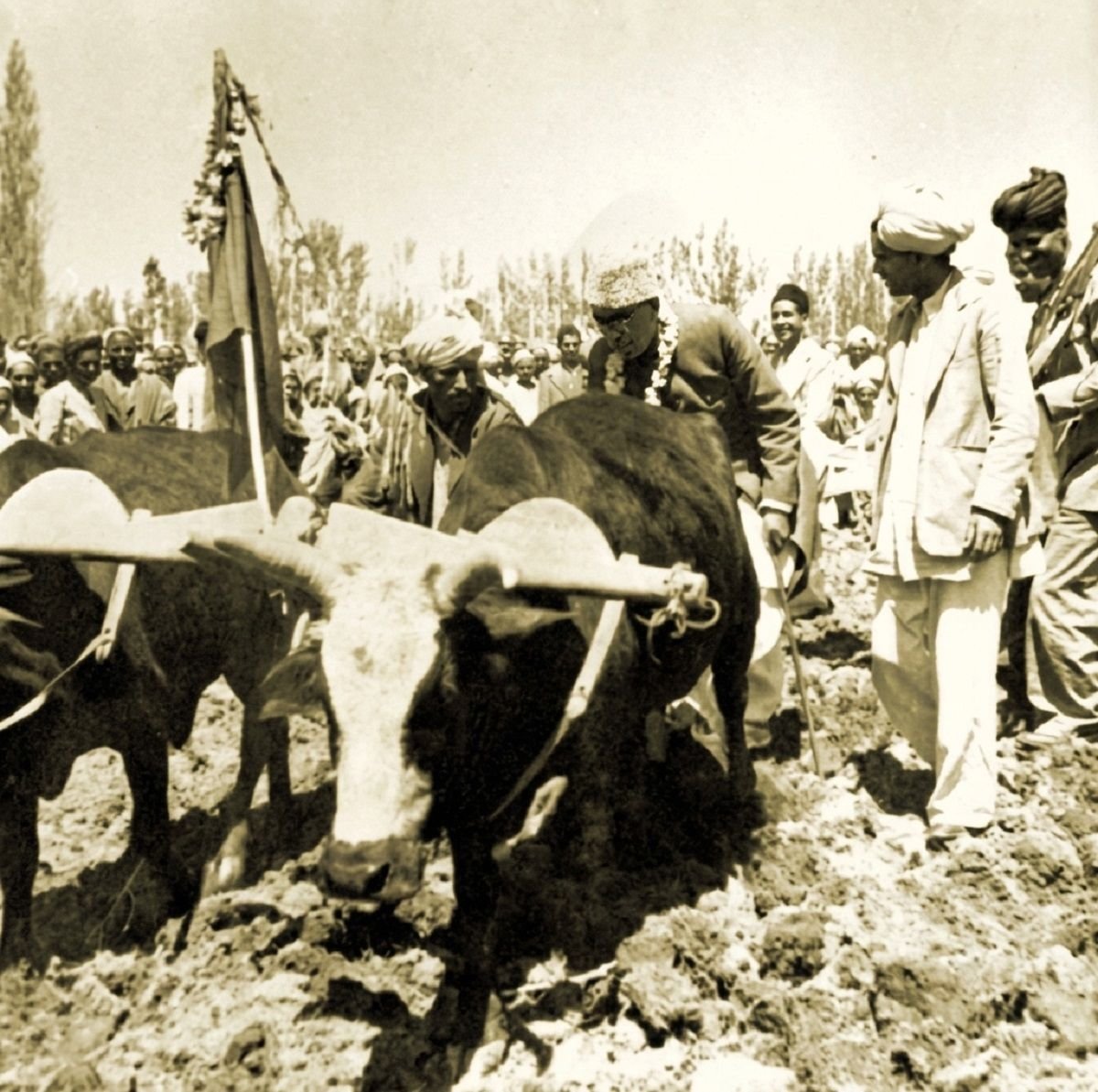
The Big Landed Estates Abolition Act of 1950 marked a significant social reform by eliminating large estates, removing middlemen, and transferring land rights to actual cultivators.
The law established a ceiling of 182 kanals, or 22.75 acres, and it is estimated that approximately 9,000 large proprietors were impacted, with nearly 4.5 lakh acres of land identified above this ceiling and about 2.3 lakh acres redistributed to tillers.
This reform profoundly transformed rural life, allowing cultivators to gain ownership of land worked by their families, thereby weakening old feudal ties and providing rural households with a valuable asset to pass down through generations.
However, land reform alone did not constitute a complete economic strategy.
Similar reforms were enacted in various Indian states, including Bihar, Uttar Pradesh, West Bengal, and others.
By 2005, India had classified around 73.67 lakh acres as surplus through land-ceiling initiatives, taking possession of 64.97 lakh acres and redistributing 54.03 lakh acres to approximately 57.46 lakh beneficiaries.
While Kashmir’s specific achievement was its aggressive dismantling of feudal ownership, it was part of a broader national reform movement.
The unique economic narrative of the valley also emerged through its artisans.
Long before modern tourism, government jobs, and construction became significant income sources, Kashmir was known for its shawls, carpets, silk, walnut woodwork, copperware, papier-mâché, and embroidery.
Pashmina was sold as a finished product, wool was transformed into carpets, wood was crafted into furniture, and copper was fashioned into decorative pieces.
This craftsmanship turned raw materials into highly valued products.
Kashmir’s original manufacturing economy thrived through homes, workshops, and small enterprises, supporting spinners, weavers, dyers, embroiderers, woodworkers, copper artisans, traders, transporters, and exporters.
Even families without agricultural land could find livelihoods through their skills.
This reality is crucial today, as mere land ownership does not guarantee prosperity. A farmer may own an orchard yet struggle financially if they lack control over storage, grading, packaging, transport, branding, and retail. Additionally, small holdings can be fractured through inheritance, and production may remain low due to inadequate irrigation, machinery, credit, and processing facilities.
The same issues are present in the handicraft sector.
A pashmina shawl can fetch a high price in markets like Delhi, Dubai, or London, but the artisan is often compensated only for individual pieces or daily labor. Similarly, a carpet can command significant sums in upscale showrooms while the artisan who dedicated months to its creation receives little of the final sale price.
Artisans generate value, but often it is someone else who controls access to the market.
Government statistics indicate that the handicraft industry still holds substantial economic significance. Exports of handloom and handicrafts surged from ₹563.13 crore in 2021-22 to ₹1,162.29 crore in 2023-24, representing an increase of over 106 percent in just two years.
According to government records submitted to the J&K legislature, exports reached ₹733.59 crore in 2024-25 and ₹492.16 crore during the first three quarters of 2025-26.
These figures suggest a cumulative total of ₹4,607.54 crore in exports from 2021-22 through the initial three quarters of the current reporting period.
More than 4.50 lakh artisans are employed in the handloom and handicraft sector, which includes producers of pashmina, carpets, embroidery, and other traditional crafts.
This data highlights an economic potential that Kashmir has yet to fully realize.
Artisans need direct market access, transparent pricing structures, affordable credit, insurance, and pension support. Strengthening geographical indications, enhancing digital marketing, better packaging, and implementing QR codes for authentic Kashmir products are also essential.
Cooperatives, brands, and export companies can empower artisans by granting them ownership stakes in enterprises built around their crafts.
Artisans should benefit from the product, brand, and market, rather than solely from their labor.
The same concept applies to agricultural land.
Kashmir produces apples, walnuts, saffron, and vegetables, yet farmers often receive only a fraction of the final sale value. Cold storage, processing, grading, packaging, branding, and export opportunities can elevate farm products into larger business ventures. Farmer-producer organizations can help small farmers consolidate production and enhance their bargaining power.
The current economic framework illustrates the urgency of this transformation.
The services sector in J&K contributes approximately 61.06 percent to the gross state value added, while the primary sector accounts for about 18.24 percent and the secondary sector around 20.70 percent.
Although both agriculture and land ownership remain vital, they cannot independently sustain a modern economy.
Punjab and Haryana have combined land ownership with advancements in irrigation, electricity, improved seeds, fertilizers, procurement, storage, mechanization, credit, and markets. Kerala integrated land reform with education, health, and social progress, while Karnataka melded land reform with industry, services, and technology. West Bengal reinforced cultivator rights through tenancy reform and the Operation Barga initiative.
Kashmir’s transfer of land did not coincide with the establishment of adequate productive systems.
This discrepancy is evident in how families sometimes sell productive assets. Ancestral land may be sold to cover medical expenses, education costs, debts, home construction, or wedding expenditures. These assets, which could generate income over time, are often liquidated for immediate financial needs.
While a car can offer comfort, it entails ongoing expenses. A house may provide shelter but does not yield income. Conversely, land, orchards, workshops, stores, and businesses can produce income over many years.
Medical expenses and debt can make land sales unavoidable. When such sales occur, the proceeds should be regarded as capital, with a portion allocated for establishing a new income source.
GST data offers another glimpse into Kashmir’s economic landscape.
The Jammu division’s GST collection for 2024-25 is reported at around ₹5,672 crore, while the Kashmir division collected approximately ₹2,452 crore.
Specifically, Jammu district accounted for about ₹4,367 crore, and Srinagar for roughly ₹1,497 crore.
According to the CAG, J&K’s overall GST collection rose from ₹8,064.14 crore in 2023-24 to ₹8,585.93 crore in 2024-25. Subsequent figures presented to the J&K Assembly indicated ₹8,680.20 crore for 2024-25, ₹8,128.44 crore for 2023-24, and ₹7,272.15 crore for 2022-23.
Variations in reporting cut-off dates, accounting methods, and GST categories can explain these discrepancies.
Moreover, GST reflects geographical disparities.
Jammu serves as a significant entry point for goods entering J&K, with a strong presence of wholesale trade, warehousing, transport, and distribution. Dealers often bill goods through Jammu before delivering them to customers in Kashmir. The region’s automobile dealers, construction material suppliers, consumer goods distributors, and industrial traders generate substantial formal taxable turnover.
In contrast, Kashmir is home to many small producers engaged in handicrafts, horticulture, home-based work, and tourism, with parts of this economy operating outside the formal tax framework.
Thus, GST cannot fully capture Kashmir’s economic contributions, as it only accounts for taxable transactions recorded within the system.
Greater formalization could enhance tax visibility and local business capabilities, benefiting small artisans.