






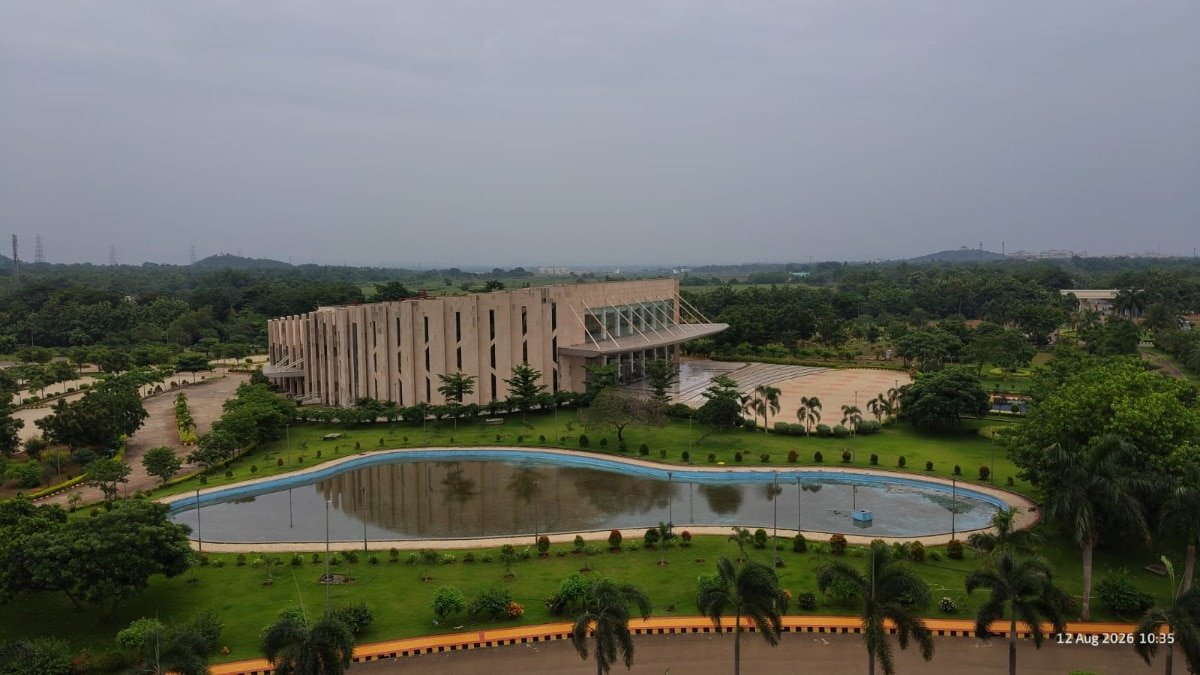
IIT Bhubaneswar, situated on Argul – Jatni Road in Kansapada, Odisha, is pioneering a novel approach to education with its Teaching Portfolio initiative. This model aims to document and assess teaching methodologies with the same thoroughness typically reserved for research.
The Teaching Portfolio serves as a systematic tool designed to improve the teaching and learning experience. It captures essential elements of teaching, similar to how research papers record research findings.
Rather than merely gathering student evaluations at semester’s end, faculty members must compile a Teaching Portfolio for each course they teach after every semester. This document also serves as a critical component for evaluating teaching effectiveness during promotion assessments. The model has garnered attention from faculty at the Indian Institute of Science (IISc).
Components of the Teaching Portfolio
The portfolio encompasses various facets of classroom instruction, including course design, teaching resources, group activities, student inquiries, assessments, feedback, and strategies for assisting students requiring extra help.
Faculty members undergo training sessions that span over 20 hours to learn how to create these portfolios effectively. For instance, a professor from the School of Mechanical Sciences documented his Mechanics course for 112 students in the Spring 2024 semester. His portfolio includes the use of chalkboards, PowerPoint presentations, and physical models such as screw jacks and trusses.
It also outlines Active Collaborative Learning sessions, where students worked in groups on critical-thinking problems related to stress and strain, encouraging diverse problem-solving methods and practical applications.
Encouraging Critical Thinking
One notable aspect of the portfolio is a section where faculty must note significant questions posed by students—especially those that prompted deeper reflection or were challenging to answer. For example, students in the Mechanics course asked insightful questions regarding trusses and material failure.
The portfolio also includes critical-thinking queries used in assignments and exams, along with information on scoring and student performance.
Supporting Struggling Students
This initiative aims to track student challenges that conventional grading may overlook. The portfolio has a segment dedicated to identifying students who require additional support due to poor performance or attendance. In the Mechanics course, several students were flagged for low grades and attendance, receiving personalized mentoring and extra sessions. Some improved sufficiently to earn passing grades.
In another case, a student undergoing medical treatment was advised to postpone enrollment until the following semester, allowing for a more manageable return to studies.
Another student with scheduling conflicts was accommodated with additional help from teaching assistants, ultimately allowing him to take the supplementary examination.
Continuous Improvement in Teaching
The portfolio also requires faculty to document feedback provided to students. In the Mechanics course, common mistakes were highlighted, correct answers were discussed, and students received strategies to prevent similar errors in the future. Feedback scores from students improved throughout the semester, indicating a positive reception of the teaching methods employed.
Acknowledgment from IISc
This innovative approach has attracted attention beyond IIT Bhubaneswar. The director noted that several IISc faculty members encountered these Teaching Portfolios while serving on selection committees, leading to an invitation for the director to present at IISc’s inaugural education workshop.
“Several IISc faculty members discovered the portfolios of IIT Bhubaneswar faculty while serving on selection committees. Impressed by this approach, they invited me to give the inaugural address at IISc for their newly launched annual workshop on education.”
Redefining Learning Spaces
According to Professor Shreepad Karmalkar, the director of IIT Bhubaneswar, the Teaching Portfolio is part of a broader educational philosophy. The institute refers to its classrooms as Learning Halls, emphasizing that interactive, active learning is more effective than traditional lectures. This philosophy promotes skills necessary for success in life, alongside academic understanding.
The Teaching Portfolio emphasizes a shift from pure lecturing to incorporating activities, collaborative discussions, and problem-solving exercises.
Future Developments
IIT Bhubaneswar is committed to further developing this educational philosophy. Plans are underway to establish a ‘Centre for Teaching-Learning and Communication’ aimed at enhancing teaching methods through research-based practices. The institute is also equipped with a high-quality video recording studio, allowing faculty to document their teaching sessions for feedback and improvement.
Ultimately, the Teaching Portfolio serves as more than just a formality; it is a dynamic tool for recording teaching practices, monitoring student learning, and fostering continuous improvement in educational quality.